

 For Boys
 For Girls
 For Kids
 Top Games
 My Games
 Top Games
 My Games


Forest Escape: Last Train Game Online

Description
Forest Escape: Last Train looks like a spooky co-op romp with twig creatures and jump scares, but it plays like a resource-management survival loop where forgetting to grab coal can strand your entire group. Underneath the horror atmosphere sits a demanding cycle of repair, scavenge, and retreat that punishes players who treat the forest like a simple horror walking sim.
| Genre | Co-op survival horror |
| Players | 1 to 4, solo or cooperative |
| Core Mechanic | Keep the locomotive running while scavenging dangerous areas along the railway |
| Win Condition | Repair and fuel the train through each railway section to escape the Warden’s world |
The Locomotive Is Your Only Safe Point
Everything in Forest Escape: Last Train orbits around the train itself. It can’t move on its own, it needs coal for fuel, physical parts for repairs, and a cleared track ahead before it advances to the next section. This forces a loop that repeats constantly: check what the train is missing, leave its safety, gather what’s needed nearby, and get back before conditions outside get worse.
The train doubles as your checkpoint and your shelter, which is why experienced players describe losing it, even temporarily, as the scariest moment in a run. Solo players in particular treat every trip away from the locomotive as a calculated risk rather than free exploration.
Coal, Stones, and the Trading Loop
Resources in Forest Escape: Last Train split into clear categories. Coal keeps the engine running and is non-negotiable if you want to keep moving forward. Stones function as a defensive resource, and general supplies can be traded for weapons when you find the right vendor point along a section. Running low on any single one of these mid-section is what usually forces a risky detour.
Players who focus purely on rushing coal without also managing stones tend to run into trouble the moment enemies appear near the train, since defense resources dry up fast if they’re never prioritized. Balancing all three categories, rather than hyper-focusing on fuel alone, separates smooth runs from chaotic ones.
Solving the Warden’s Puzzles
The Warden’s twisted logic governs which railway paths unlock, and the puzzles built around this idea deliberately avoid conventional logic. A locked path might require you to notice a detail in the environment rather than solve a standard lock-and-key sequence, and each solved puzzle is framed as revealing another fragment of the Warden’s fractured mind.
One specific area, the Mystic Room, has drawn a lot of attention in early player discussion. It features a doorbell mechanic alongside key visual clues and a Wheel of Fortune tied to a set of winning numbers, and getting through it cleanly depends on reading those number cues correctly rather than brute-forcing the room.
Puzzle-focused players tend to enjoy this unpredictability, since it rewards careful observation over memorized patterns. Players who prefer straightforward objectives sometimes find the intentionally illogical puzzle design frustrating, and that split shows up repeatedly across early community feedback.
Enemies, Traps, and the Bizarre Locations Along the Route
The forest itself shifts identity between sections. You’ll pass through an abandoned theme park, encounter unsettling twig creatures roaming the tree line, and navigate areas built more around dread and dark comedy than pure jump scares. Early in the game, most threats are avoidable if you’re paying attention, but by the time you reach later railway sections, enemy pressure ramps up alongside puzzle complexity.
Resurrection graves scattered through the world act as a safety net for cooperative groups, letting a fallen teammate get back into the run rather than sitting out until the next checkpoint. Groups that split up to gather resources faster tend to lean on this system more heavily than cautious, tightly grouped teams.
Co-op Versus Solo Runs
Playing Forest Escape: Last Train with up to three friends changes the entire rhythm of a run. Groups can divide labor, sending one player for coal while another handles a puzzle, which dramatically speeds up progress but also multiplies the chances someone gets caught outside the train at the wrong moment. Solo players carry every decision themselves, which slows the pace but removes the risk of teammates wandering into danger independently.
Community discussion around the game frequently centers on this balance question: whether the intended experience is the chaotic, comedic version with a full group, or the tenser solo version where every trip outside the train feels riskier by necessity. Both playstyles are supported, but they produce noticeably different runs through the same railway sections.
What the Early Access State Means for Players Right Now
Forest Escape: Last Train is still in early access, and that shows in a few specific ways players have flagged, including occasional desynchronization between teammates and inventory items sometimes not carrying over correctly after loading a checkpoint. None of this breaks the core loop, but it’s worth acknowledging honestly rather than pretending the current build is fully polished.
Wagon covers are one recent addition players have specifically called out, since they affect visibility and performance during a run, and the developers have already adjusted how these render based on early feedback.
Forest Escape: Last Train asks you to treat the locomotive as sacred ground, and once you’ve made a supply run past the Mystic Room with coal running dangerously low, that pressure stops being an abstract mechanic and starts feeling like the entire point of the game.

 29
29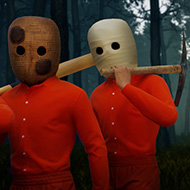
 4 Player






























 2675
2675


