
 For Boys
 For Girls
 For Kids
 Top Games
 My Games
 Top Games
 My Games


Keeping You Close Game Online

Description
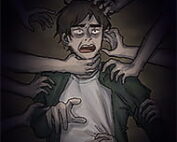
What happens when the person who loved you most becomes the person you have to lock away? That’s the question Keeping You Close opens on, and it doesn’t spend much time softening the answer. You play as the protagonist who made that exact choice — trapping her closest friend in a rusted cage in the basement — and every day afterward is spent managing the fallout of that decision through conversation.
| Genre | Psychological horror visual novel |
| Perspective | First-person narrative, dialogue-driven |
| Core Mechanic | Sanity bar shaped by dialogue choices |
| Endings | Three, based on accumulated choices |
| Platform | Browser |
Keeping You Close belongs to a subgenre players already have strong opinions about — the yandere reversal, where the obsessive character isn’t the threat you’re fighting but the one you’ve already contained. The game leans into that inversion fully. The friend in the cage isn’t hunting you across a map; she’s a fixed presence you return to, and the horror comes from what staying close to her, day after day, does to you.
The Sanity Bar and What Drives It
Every conversation with the friend nudges your sanity bar in one direction or another, and the game frames this less like a puzzle to optimize and more like an honest reflection of how draining it is to sit across from someone you used to trust completely. Choosing cold, vigilant responses protects your sanity in the short term but visibly affects how the friend reacts to you over successive visits. Choosing warmth and nostalgia does the opposite — it comforts her and chips away at your own stability, since every gentle word risks reopening the exact dynamic that got people hurt in the first place.
Beginners tend to treat the sanity bar like a simple resource to keep topped up, picking cold responses across the board to stay safe. That approach technically protects your stats, but players who’ve finished the game tend to note it also flattens the story, since the three endings are shaped by consistency of tone rather than a single big decision near the end. A run built entirely on distance and a run built entirely on guilt-driven warmth land in very different places by the final scene.
Daily Interactions and Dialogue Branching
The structure repeats across a small number of days, and each visit to the basement offers a limited set of dialogue options rather than an open conversation tree. That constraint is deliberate — it keeps individual sessions short while making the cumulative effect of your choices the actual mechanic players are engaging with. Community discussion around the game often centers on how few CGs and total word count there are relative to the concept’s potential, which is a fair criticism players raise even when they otherwise enjoyed the writing.
By the time you reach the later days, the dialogue options themselves start reflecting your accumulated pattern rather than offering a fresh spread of tones each time. A protagonist who’s leaned cold throughout is offered fewer warm options, and the reverse is also true, which mirrors how the sanity bar is meant to function as psychological momentum rather than a stat you can freely reverse whenever it’s convenient.
The Three Endings
What separates the endings
The three outcomes hinge on where your sanity bar and your accumulated warmth toward the friend land by the final day, rather than on one dramatic choice players might expect from a horror visual novel. Players who kept the protagonist emotionally distant throughout tend to land on the ending most read as the “safest,” while accumulated guilt and warmth push toward endings the community generally considers darker and more ambiguous about what happens once the cage is finally opened.
- Players consistently ask whether choices early on lock you out of certain endings — they don’t lock anything individually, but they build toward the pattern that ultimately decides which of the three outcomes you reach.
- Another common question is whether the friend in the cage is ever a physical threat during gameplay — she isn’t in the traditional jump-scare sense; the tension in Keeping You Close comes from dialogue and psychological pressure, not pursuit.
- Players also ask how long a full playthrough takes — sessions are short given the game’s word count, and most players report finishing an ending in under an hour, which makes replaying for the other two endings a low-commitment ask.
Keeping You Close is short enough that some players wish there were more to it — more days, more rooms beyond the basement, more art beyond what’s currently included — but what’s there commits fully to its premise. The sanity bar isn’t just a meter, it’s the whole story compressed into a single number, and watching where that number ends up by the third ending is the reason players come back to run it again.

 50
50






























 2688
2688


