
 For Boys
 For Girls
 For Kids
 Top Games
 My Games
 Top Games
 My Games


Librarian: Tidy Up The Arcane Library! Game Online

Description
In Librarian: Tidy Up The Arcane Library! you start with shelves full of misplaced magical books, which matters because organization is the entire challenge. Every decision affects how quickly the collection can be restored to proper order. The opening tasks introduce simple sorting rules, but the game steadily adds more conditions that force players to think several steps ahead. What begins as a relaxing cleanup gradually becomes a detailed puzzle centered on planning, observation, and efficient use of shelf space.
| Genre | Organization Puzzle |
| Core Goal | Sort and arrange magical books |
| Main Activity | Categorization and shelf management |
| Known For | Relaxing but increasingly demanding sorting tasks |
Book Sorting Systems in Librarian: Tidy Up The Arcane Library!
The main mechanic involves placing books into appropriate locations according to magical rules and category requirements. Early sections introduce simple arrangements, while later challenges combine multiple sorting conditions at once. The game rewards observation more than speed during the opening stages. Players who immediately begin moving books often create extra work because future placements become more difficult.
Many newcomers move books immediately without examining the entire shelf structure first. That habit often creates unnecessary work later. Experienced players usually scan every shelf before making a single move because understanding the complete layout reveals relationships that are easy to miss.
By the time you reach larger collections, efficient planning becomes more important than rapid actions. Reorganizing a shelf repeatedly costs valuable time. Puzzle enthusiasts often compare different solutions because there is satisfaction in finding a cleaner arrangement with fewer adjustments. Watching a complicated collection gradually fall into place is one of the most rewarding parts of the game.
Managing Magical Collections in Librarian: Tidy Up The Arcane Library!
Different books often belong to specific groups, creating small logic puzzles throughout the library. Some sections require players to recognize patterns, while others focus on maintaining order across several connected shelves. As collections grow larger, mistakes made early can affect the entire organization process.
Completionists usually enjoy achieving perfectly arranged collections. Relaxed puzzle fans often appreciate the gradual increase in complexity. Players who enjoy optimization frequently challenge themselves to complete sections with minimal rearrangement because efficient organization becomes a puzzle of its own.
The game creates a satisfying rhythm because every corrected shelf produces visible progress. Watching disorder disappear is a major part of the appeal. A recognizable player moment occurs when a nearly finished collection suddenly reveals one misplaced volume that requires a complete reevaluation of the arrangement strategy.
Details Experienced Players Notice
Shelf forecasting refers to leaving room for future placements before a section becomes crowded. Players who use this approach generally avoid the most common late-stage mistakes. The technique becomes especially important once several categories compete for limited space. Planning ahead prevents situations where a perfectly organized shelf must be rebuilt from the beginning.
Community discussions often mention clean runs and perfect organization. Those phrases typically describe solving sections with minimal rearrangement. Players pursuing perfect organization frequently compare move counts and discuss more efficient layouts. The vocabulary may sound simple, but those conversations reveal surprisingly deep strategic thinking.
A debated aspect is that some advanced puzzles can feel surprisingly demanding compared with the calm atmosphere. For certain players that contrast is enjoyable, while others prefer the simpler early tasks. The difficulty shift is not sudden, but it becomes noticeable once collections contain enough books to create multiple overlapping placement rules.
Patterns, Efficiency, and Progress
One recognizable moment occurs when a nearly complete shelf reveals a hidden placement conflict that forces a broader reorganization. Players who have spent time with the game usually recognize that situation instantly. The discovery can be frustrating at first, but solving the resulting puzzle often produces the strongest sense of accomplishment.
Advanced strategies focus on identifying category relationships before moving any books. A few seconds of planning can save many actions later. Experienced players frequently create mental placement maps and then execute their plan only after understanding how every shelf interacts with nearby collections.
The challenge grows steadily rather than suddenly, allowing players to develop stronger organizational habits throughout the library. Because the game focuses on logic rather than speed, success usually comes from recognizing patterns and avoiding unnecessary movement. That approach helps maintain a balance between relaxation and meaningful puzzle solving.
Is speed important in the beginning?
Careful observation is usually more valuable than speed during the opening sections. Understanding category relationships prevents mistakes that require multiple corrections later. Players who examine shelf layouts before moving books generally progress more efficiently through increasingly complex collections.
Why do some shelves require rearranging completed work?
Many puzzles are designed around limited space and category conflicts. A shelf that appears finished may need adjustments once additional books become available. Recognizing those future requirements early is one of the key skills that experienced players develop.
What helps with advanced organization puzzles?
Looking ahead before placing books is extremely useful. Players who plan around future shelf space generally solve difficult sections more efficiently than those who focus only on immediate placements. Techniques such as shelf forecasting become increasingly valuable as collections become larger and more interconnected.
Librarian: Tidy Up The Arcane Library! succeeds because organizing magical collections becomes surprisingly engaging over time. From carefully arranged spellbooks to crowded shelf layouts that require long-term planning, Librarian: Tidy Up The Arcane Library! consistently turns library management into a satisfying puzzle challenge. The most memorable moments usually involve discovering a cleaner arrangement after several failed attempts, proving that every shelf, every category, and every spellbook contributes to the appeal of the arcane collection.

 60
60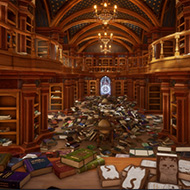
 For Boys
  For Girls






























 2668
2668


