
 For Boys
 For Girls
 For Kids
 Top Games
 My Games
 Top Games
 My Games


[Stories to Tell] The Stoneville Incident Game Online

Description
You press record, adjust the camera angle in your hallway mirror, and start narrating your first night in the new house the way you would for any vlog. Nothing about [Stories to Tell] The Stoneville Incident announces itself as dangerous in that opening minute — it just feels like a housewarming video that happens to have a slightly too-quiet soundtrack.
| Genre | Psychological horror, found-footage |
| Perspective | First-person |
| Estimated playtime | 15–20 minutes |
| Core focus | Environmental storytelling and vlog-style recording |
The core mechanic in Stoneville Incident is deceptively simple: you move through the house recording segments for your vlog, and the game uses that framing device to control pacing. Instead of a HUD telling you what to do, objectives are folded into what your character says out loud as he narrates, so beginners often miss cues because they’re rushing rooms instead of listening. The game rewards people who treat each recorded segment as a checkpoint in the story rather than a chore to click through.
Early in the game, the tone stays close to a normal moving-in video. You film boxes, comment on the layout, maybe joke about the neighborhood. This is where most first-time players get comfortable, and that comfort is exactly what the pacing is built to exploit. By the time the recordings start catching things that weren’t there when you filmed them, the shift feels earned rather than random, because the game has spent real time establishing a baseline of normal.
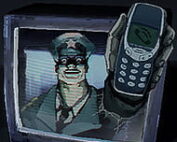
What players get wrong most often is treating this like a jump-scare gallery instead of a found-footage piece. There aren’t dozens of scripted frights stacked back to back. The tension comes from noticing small discrepancies between what you’re saying and what the footage shows, and if you’re speed-running rooms you’ll walk right past the details that make the second half land. One specific beat that regulars bring up constantly is a moment involving a police visit partway through — a scene that splits opinion hard in the community.
- Some players find the police sequence the most unsettling stretch of the whole game, since it interrupts the vlog format with an outside authority figure who doesn’t react the way you expect.
- Others feel this section runs a little long compared to the tighter first half, and say the mystery around the house itself gets diluted by it.
- A smaller group treats it as the turning point that justifies replaying with the checkpoint system to see how the second ending changes.
Recording Mechanics and the Vlog Structure in Stoneville Incident
The vlog conceit isn’t just flavor text, it’s the actual interface. Every time you start a new recording, the game is quietly setting up the next reveal, and paying attention to how your character frames each shot tells you what’s about to matter. Casual players tend to click through these segments the same way they’d skip a tutorial, and that’s usually where the first real confusion sets in about what happened and why.
There’s also a rhythm to how the house itself changes between segments. Rooms you’ve already filmed aren’t static; small props shift, lighting changes, and the game trusts you to notice without pointing a marker at it. This is the strongest design choice in the whole experience for players who like environmental storytelling, and the weakest one for players who want more explicit direction.
Exploration types get the most out of backtracking through earlier rooms once new information appears. Story-focused players tend to prioritize dialogue and narration over physically checking every corner. Both approaches finish the game, but they walk away with different impressions of how much actually changed in the house.
The Ending Split and Why Stoneville Incident Rewards a Second Run
A checkpoint sits near the finale specifically so you can revert and pull the second ending without replaying the full 15–20 minutes again. This matters because the two outcomes genuinely change what the police-visit sequence means in hindsight, and most players don’t clock that on a first attempt.
Completionist types treat this checkpoint as the whole reason to return, since seeing both endings back to back reframes earlier scenes that felt ambiguous the first time through. Players who just want the scare once tend to stop after the first ending, and that’s a completely reasonable way to experience it too.
Community discussion around Stoneville Incident often lands on comparisons to other found-footage horror games, and the developer has been open that this project sits in a small horror anthology built from real nightmares. That personal framing is part of why forum chatter treats the house itself, and the town it sits in, as more important than any single scare.
Performance Notes Players Run Into on Stoneville Incident
Because this runs on a modern engine with heavier lighting effects, players on older GPUs report noticeably rougher frame pacing at maximum settings during the darker interior scenes. Dropping visual settings a notch or two below the highest preset is the most common fix mentioned in comment sections, and it doesn’t cost you any of the story beats that matter.
This isn’t a technical showcase, though, and treating it as one misses the point. The rougher edges — some describe the character work as minimal — are consistent with a short, focused horror piece rather than a sprawling one, and most people finish it in a single sitting without feeling like anything essential was cut short.
Divisive as the middle stretch can be, the overall shape of Stoneville Incident holds together as a tight, personal horror short rather than a padded one.
What happens during the police visit in Stoneville Incident?
A patrol shows up partway through your recording, and how you and the officer react shifts the tone of the back half. It’s the scene players argue about most, both for how effective it is and for whether it belongs in a story this short.
Does Stoneville Incident have multiple endings?
Yes, and a checkpoint near the end lets you jump back to get the second one without replaying the earlier vlog segments from scratch.
Why does the footage look different from what my character described?
That gap between narration and what the recording actually shows is the central horror device — small mismatches accumulate instead of a single dramatic reveal, and noticing them is most of the experience.
Stoneville Incident isn’t trying to be a long game, and it doesn’t need to be — the fifteen-odd minutes it asks for are spent almost entirely on that gap between what your character says into the camera and what the house is actually doing behind him. Whether you stop after the first ending or use the checkpoint to see the second, the vlog framing is what makes this particular haunted house stick with people longer than its runtime suggests.


 42
42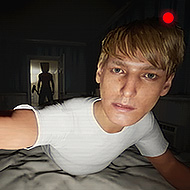





























 2697
2697


