
 For Boys
 For Girls
 For Kids
 Top Games
 My Games
 Top Games
 My Games


Taos Research Project Game Online
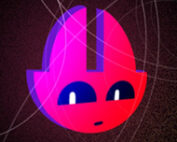
Description
In Taos Research Project you begin inside a controlled containment wing that already feels like it is one failed cycle away from collapse, and every system you touch confirms that instability is the normal state of the facility.
| Genre | Science horror simulation |
| Core Mechanic | Managing unstable experimental anomalies in controlled lab zones |
| Main Facility | Taos Deep Research Complex |
| Primary System | Containment Grid Interface (CGI) |
| Key Threat Type | Phase-shift anomalies |
Containment Pressure in Taos Research Project
The Containment Grid Interface is the operational heart of Taos Research Project, and every decision passes through its heat and stability layers. Early containment feels manageable because only one or two lab sectors are active, but system stress accumulates silently even during successful stabilization. That hidden buildup is what causes most late failures.
Once Wing 3 of the Taos Deep Research Complex unlocks, players begin encountering chained anomaly activations that require simultaneous containment routing. Many players describe this phase as the point where the game stops feeling like management and starts feeling like controlled collapse. The system punishes overcorrection as much as underreaction.
In later sections, containment becomes less about stopping anomalies and more about deciding which ones are allowed to persist. This creates a moral pressure layer that divides player strategies between strict isolation and adaptive tolerance. Both approaches are valid, but neither guarantees long term safety.
A common failure moment occurs when players reroute too many power nodes in sequence, triggering thermal overload across adjacent labs. This cascading effect is one of the most punishing mechanics in Taos Research Project and is often referred to in community discussions as a “chain heat event.”
Taos Research Project Anomaly Behavior Systems
Phase-shift anomalies in Taos Research Project alternate between physical and non-physical states, which prevents consistent containment strategies. Standard pulses fail unless synchronized with environmental frequency locks, which vary by lab wing. This forces constant recalibration rather than repetition.
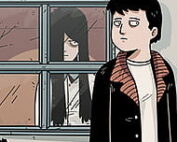
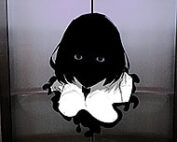
The Glass Echo anomaly is one of the most discussed systems in the Taos Deep Research Complex, because it replicates movement patterns inside sealed rooms. This creates confusion during emergency containment cycles, especially when multiple Glass Echo instances overlap in adjacent chambers. Players often misinterpret it as a visual glitch before learning its behavior rules.
By late progression, anomalies begin interacting with each other instead of only reacting to the player. This creates compound instability where one containment success can indirectly trigger another failure elsewhere. The game intentionally avoids predictable escalation patterns.
Some players appreciate this unpredictability as realism, while others feel it undermines planning precision. That debate is a recurring topic in Taos Research Project communities, especially among optimization-focused players.
Facility Zones and Taos Research Project Progression
The Taos Deep Research Complex is structured into five major wings, each introducing new containment constraints that redefine previous strategies. Wing 2 introduces gravity fluctuation chambers that alter movement timing, while Wing 4 adds synchronized lock systems that require precise activation sequences. These layered systems build complexity gradually.
Wing 3 is widely considered the most unstable transition point in Taos Research Project because multiple anomaly types activate simultaneously without full system support. Players often report feeling overwhelmed during this phase due to overlapping containment demands. It is where many first major failures occur.
In Wing 5, containment systems begin degrading faster than they can be stabilized, forcing prioritization of survival over full control. This shift changes the game’s rhythm from management to damage limitation. The Taos Deep Research Complex becomes less predictable and more reactive.
A subtle environmental detail is the flickering diagnostic panels that show delayed system status updates. This delay creates uncertainty during critical decisions and is one of the most recognizable tension cues in the game.
Systems Breakdown and Player Adaptation
The Containment Grid Interface includes heat-based limitations that prevent infinite rerouting of systems. Every adjustment increases thermal load, and once thresholds are crossed, partial shutdowns occur in connected labs. This creates cascading vulnerability across the facility.
Players developed the term “soft stability” in Taos Research Project communities to describe deliberately partial containment states that can be rapidly adjusted. This approach sacrifices safety margins for flexibility, allowing faster reaction during anomaly spikes. It is effective but risky.
Advanced players often avoid full stabilization unless absolutely necessary, preferring adaptive containment layers instead. This strategy becomes essential in later wings where anomalies reappear faster than they can be fully neutralized. The game rewards flexibility over perfection.
However, this approach is controversial because it increases long term instability risk across the Taos Deep Research Complex. Some players prefer strict containment despite slower response times, creating a clear divide in strategy philosophy.
Player Questions About Taos Research Project Mechanics
Why do phase-shift anomalies ignore containment pulses?
Phase-shift anomalies in Taos Research Project alternate between states that standard containment pulses cannot lock onto consistently. Only frequency-synced fields generated through the Containment Grid Interface can stabilize them. This requires matching environmental oscillation patterns per wing.
What causes cascading breaches in the facility?
Cascading breaches occur when thermal overload spreads through connected lab systems after excessive rerouting. In Taos Research Project, this creates chain reactions across the Taos Deep Research Complex that are difficult to isolate once initiated. Prevention depends on controlled system distribution.
How do players stabilize Glass Echo encounters?
Glass Echo stabilization requires predictive tracking and delayed sealing cycles rather than direct confrontation. Players in Taos Research Project often use staggered containment locks to break replication loops. Timing accuracy is more important than reaction speed.
Taos Research Project concludes its early arc inside the Null Wing, where containment logic fails entirely and the Taos Research Project forces players to rely on improvised routing across the final unstable sections of the Taos Deep Research Complex.

 88
88
 For Boys
  For Girls



























 2694
2694


