
 For Boys
 For Girls
 For Kids
 Top Games
 My Games
 Top Games
 My Games


FEED THE FISH Game Online
Description
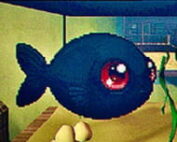
The instruction in FEED THE FISH is as simple as it sounds: keep the fish alive, don’t let it starve. What the game does not tell you upfront is that the fish is the least unsettling thing in your trailer. FEED THE FISH is a short first-person psychological horror game built in a PSX aesthetic, set inside a secluded trailer on a foggy evening where the sky has turned the wrong shade of red and the neighbours outside the window are behaving in ways that do not have an obvious explanation. The runtime sits between 10 and 15 minutes, which is exactly as long as it needs to be.
| Genre | First-person psychological horror |
| Platform | Windows |
| Playtime | 10–15 minutes |
| Visuals | PSX low-poly / VHS / CRT aesthetic |
| Version | 1.2 (hotfix build) |
What You Actually Do in FEED THE FISH
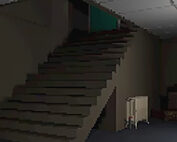
The controls are minimal: WASD to move, mouse to look, E or left click to interact, right click to zoom. You are in a small trailer with a fish tank, a black fish swimming peacefully inside, and a task that requires you to feed it. The interaction itself takes seconds. What takes longer is noticing what is outside the windows — or deciding whether you want to look. The tagline, “Feed the fish. Do not look out the window,” arrives early enough that most players understand the game’s basic premise, and still look anyway.
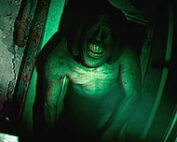
FEED THE FISH escalates through environmental detail rather than explicit event sequences. The fog thickens. The sky colour shifts. The figures outside change in ways that are registered in peripheral vision before they become direct confrontations. Players in the comments describe the experience as eerie but cosy in the opening minutes and then genuinely unsettling once the game stops being subtle about what is happening around the trailer. The jump scare tied to the fish feeding moment specifically has been called out by multiple players as landing harder than expected — partly because the lead-up encourages a false sense of routine.
The game creates a text file on your computer during gameplay as part of the experience. This is flagged in the description and matters to players who notice it — the file functions as a narrative element rather than malware, and finding it after finishing the game adds a layer that several players describe as the moment the ending clicked for them. Players who miss the file often report the ending as abrupt or confusing, while players who check it tend to feel the payoff lands.
The Fish, the Evolution, and What the Ending Is Actually Doing
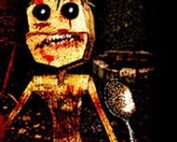
The black fish does not stay a simple pet. Over the course of FEED THE FISH’s short runtime, the fish visibly changes — and by the time the ending sequence arrives, what is in the tank has become something players consistently describe as scary to look at. The evolution is gradual enough that players focused on the window events sometimes miss how far it has progressed until the final moments make the change impossible to ignore. One comment describes seeing the fish evolve as the thing that sent chills down their spine more than any of the exterior elements, which is an unusual priority order for a game where distorted faces feature in the marketing.
The ending draws on two registers that the game has been building separately: the cult-adjacent behaviour of the neighbours outside, and whatever the fish has become by the time the player has faithfully kept feeding it. Players who describe the story as touching on analog horror and then cosmic horror are tracing the same escalation the game structures deliberately — familiar domestic task, uncanny environmental wrongness, then something larger and stranger underneath both. The note the fish leaves at the end is the piece most players reference when discussing whether the narrative lands, and the split is consistent: players who found it, found the ending satisfying; players who did not, found it confusing.
Some players have flagged the ending as too abrupt even with the text file. This is a reasonable criticism for a 10-to-15-minute game that does not explain its mythology — FEED THE FISH commits to atmosphere and implication over exposition, which works for players comfortable in that register and leaves others wanting more resolution. The game’s visual approach has also drawn one pointed criticism around the PSX aesthetic feeling generic in a space with heavy competition, though the majority response to the low-poly, CRT-filtered presentation has been positive, particularly the fish tank rendering and the distorted faces of the figures outside.
The PSX Kit and What Makes the Atmosphere Work
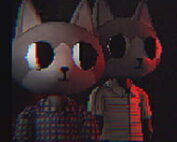
FEED THE FISH was built using a PSX Horror Kit created by the developer themselves, which is made available separately. The visual grammar it produces — low-poly geometry, CRT screen curvature, VHS colour bleeding — does specific work in this game that goes beyond aesthetic nostalgia. The limited draw distance and the way low-poly models distort faces make the figures outside the window genuinely harder to parse, which amplifies the uncanny register the game is working in. A photorealistic face doing the same thing would read differently; the PSX rendering makes it ambiguous in a way that is more unsettling than explicitness would be.
The audio has been flagged as too loud in certain sequences by a handful of players, particularly the louder jump scare moments relative to the ambient trailer sounds. This is the most consistent technical criticism across the comments. Some stuttering and slowdown on specific hardware configurations was also reported, and a hotfix build (version 1.2) addressed minor bugs after launch. Players encountering performance issues are on the earlier 1.0 or 1.1 build rather than the current release.
Common Questions About FEED THE FISH
What does the text file the game creates actually contain?
The text file is generated during gameplay as a narrative element — it is part of the horror experience rather than a technical artefact. Its contents relate directly to the fish and what has been happening in the trailer during your playthrough. Players who check it after finishing report that it recontextualises the ending and resolves some of the ambiguity around what the fish left behind. The game’s description flags the file creation in advance so players are aware it will appear on their system.
How scary is FEED THE FISH and does it rely heavily on jump scares?
FEED THE FISH uses a small number of targeted jump scares rather than relying on them throughout. The primary tone is psychological unease built through environmental detail — the window, the fog, the figures, the fish’s changing appearance — and the jump scares land harder than they would in a game that deploys them constantly. Players who are sensitive to jump scares specifically should be aware that the fish feeding interaction triggers one of the most commented-on moments in the game. The overall atmosphere is described more often as eerie and cosy-then-wrong than as relentlessly frightening.
Does FEED THE FISH have multiple endings?
Based on current player reports, FEED THE FISH has a single ending. The experience is linear — the fish escalation, the exterior events, and the text file all proceed on a fixed path regardless of how often the player chooses to look out the window versus staying focused on the tank. The variability in how the ending is received comes from whether the player finds and reads the text file, not from branching choices within the game itself.
FEED THE FISH earns its runtime by keeping the domestic task — feed the fish, keep it alive — running as a grounding thread while everything outside the trailer becomes increasingly wrong. The fish’s evolution from small black pet to something the ending note has to explain is the game’s best structural choice, and the moment the feeding interaction becomes a jump scare is the point where FEED THE FISH stops being a PSX atmosphere piece and reveals what it was building toward the whole time.


 33
33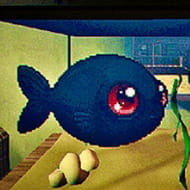
























 2688
2688


