
 For Boys
 For Girls
 For Kids
 Top Games
 My Games
 Top Games
 My Games


Little Horrors: The Mortuary Game Online
Description
A phone call in the middle of the night is never good news, and in Little Horrors: The Mortuary it’s your employee on the other end, apparently trapped in the storage room and asking you to come help before anything else goes wrong. What starts as a routine favor for a coworker turns into the entire premise of the game before you’ve even left the house.
A Night Call Sets the Story in Motion
The setup is deliberately simple: you’re woken up, told someone’s stuck at your mortuary, and sent out into the night to sort it out. Little Horrors: The Mortuary doesn’t waste time building up to that call — it’s the very first thing that happens, and everything else in the short runtime flows from your decision to go check on your trapped employee rather than wait until morning. There’s no extended cutscene explaining who you are or why you’re the one responsible for the building; the phone rings, the request is urgent, and the game trusts that urgency to carry you straight into the opening scene.
That compressed opening is one of the more deliberate choices in how Little Horrors: The Mortuary paces itself. Rather than spending time on backstory, it treats the late-night call as a hook that immediately puts you on the back foot — you’re driving to your own workplace in the dark, already unsure of what you’re walking into, and the game leans on that uncertainty instead of dialogue-heavy exposition to build early tension. Story-focused players tend to appreciate this economy, since it means every line of text that does appear carries more weight than it would in a longer, slower-paced opening.
By the time you actually arrive at the mortuary, the atmosphere has already shifted from mundane to unsettling, even before you’ve encountered anything overtly strange. That shift — ordinary nighttime drive turning into dread the moment you step through the door — is the kind of pacing detail that only really lands once you’ve played it yourself rather than read about it secondhand.
Point-and-Click Puzzles Inside the Storage Room
Once you arrive, the game settles into classic point-and-click rhythm — examine the room, pick up what looks useful, figure out what’s blocking the door or keeping your employee stuck. The pixel art here uses noticeably large, simplified shapes rather than dense detail, which keeps the puzzle elements readable at a glance even as the mortuary setting gets steadily more unsettling around you. Every interactive object in the storage room is rendered with just enough visual distinction to stand out from the background, a small design choice that matters a lot in a genre where half the challenge is usually just noticing what can be clicked.
Beginners sometimes move too fast through the opening rooms, clicking past objects that turn out to matter later once things take a stranger turn. Slowing down and actually inspecting the environment, rather than beelining for the obvious exit, tends to reward players with a clearer read on what’s actually happening in the building. Puzzle-oriented players in particular benefit from treating the storage room as a checklist rather than a straight line — the game rewards the kind of methodical pixel-hunting that adventure-game regulars will recognize from the genre’s older point-and-click roots, where nothing gets left unclicked before moving forward.
Because the puzzle logic in Little Horrors: The Mortuary is built around a single contained space rather than a sprawling map, backtracking is rarely a chore, but it is necessary. Once you pick up a new item, it’s worth mentally revisiting earlier objects in the storage room to see if anything reacts differently now that you’re carrying something new. Horror-first players who prioritize atmosphere over thorough searching often miss these secondary interactions entirely, which isn’t a wrong way to play, but it does mean seeing less of what the room actually has to offer before your employee is freed.
Puzzle-focused players tend to backtrack through earlier rooms once new items unlock fresh interactions, since the game rarely tells you outright which object a new pickup is meant to solve. Horror-first players mostly push forward quickly, prioritizing atmosphere over thorough exploration, which trades some of the puzzle depth for a faster, tenser pace through the mortuary. Series-curious players treat this entry as a taste test for the planned follow-ups in the same format, using the short runtime here to gauge whether the point-and-click structure is worth following into future entries.
A Deliberately Short, Minimalist Horror Format
Little Horrors: The Mortuary is upfront about being short — most players finish it in a single sitting well under an hour, and more than a few reviewers noted beating it faster than expected on their first attempt. That brevity is by design, since the game is positioned as the first entry in a planned series of small point-and-click horror adventures rather than a standalone full-length release. The idea is closer to an anthology structure: each entry stands alone, tells a complete short story, and doesn’t ask for the kind of time investment a full adventure game usually demands.
The minimalist pixel-art approach is one of the more debated choices in early feedback: some players find it charming and appropriately understated for a quick horror short, while others have said a slightly higher resolution might have sharpened the scares. It’s a fair trade-off to acknowledge rather than gloss over — the large, simplified pixel style keeps the storage room’s puzzle objects easy to parse, but it also softens some of the visual dread that a more detailed art style might have delivered once things in the mortuary stop making sense.
What the short format does especially well is avoid padding. There’s no filler dialogue, no busywork puzzle added just to extend playtime, and no wandering corridors with nothing in them — every room you enter after that opening phone call exists because it has something for you to solve or discover. For players used to horror games stretching a thin premise across several hours, Little Horrors: The Mortuary’s willingness to end once the story’s actually told is itself part of the appeal.
How long does it take to finish Little Horrors: The Mortuary?
Most players complete it in well under an hour, since the game is intentionally scoped as a short point-and-click experience rather than a longer adventure title. Several early reviewers specifically noted finishing it faster than they expected on a first playthrough, which is consistent with how tightly the storage room sequence is paced.
Is Little Horrors: The Mortuary a full game or a demo?
It’s a complete short release rather than a demo — specifically the first entry in a planned series of similarly small horror adventures, each meant to stand on its own. There’s a clear beginning, middle, and end built around the night call and the storage room, with no unfinished branches left hanging.
What should I actually be doing once I reach the storage room?
The core objective is freeing your trapped employee, which means examining the room for whatever’s blocking access and working through the point-and-click puzzles standing between you and getting them out safely. Picking up and reusing items on multiple objects in the room is usually the fastest way to spot what the game actually wants you to do next.
For a game built around one phone call and one night at the mortuary, Little Horrors: The Mortuary packs a surprising amount of unease into its short runtime, and the storage room puzzle at its center is exactly the kind of small, self-contained horror the series seems built to keep delivering.

 1
1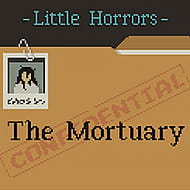



























 2665
2665


