
 For Boys
 For Girls
 For Kids
 Top Games
 My Games
 Top Games
 My Games


House 2 Full Game Game Online
Description
What happens when you stop treating House 2 Full Game like a checklist of scares and start treating it like a house that’s actually paying attention? That question is basically the design pitch — most of the friction new players hit comes from expecting a linear haunted-house crawl and getting something closer to a reactive simulation instead.
A House That Remembers What You Did Last Room
The core mechanic in House 2 Full Game is state persistence dressed up as horror pacing. Every door, item, and disturbance you leave behind stays that way, and the house’s threats respond to the mess you make rather than following a scripted timer. This single design choice is why walkthroughs for this game age faster than most — your run genuinely diverges from someone else’s within the first ten minutes.
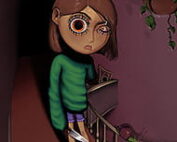
Tabby carries the bulk of the early game, and her sections establish the rules the rest of the story leans on. Speedrunners in particular have picked apart just how fast the house can escalate if you skip the “safe” exploration beats, which has turned into one of the more discussed quirks of the design.
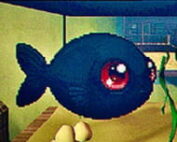
Marty the snail tags along throughout, and while he’s easy to dismiss as flavor, ignoring him is a mistake. He’s a passive signal for danger in rooms where the visual and audio cues are otherwise easy to miss on a first run.
Where Melody Changes the Rhythm
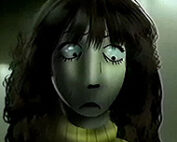
Melody becomes playable once Tabby’s storyline hits certain points, and her segments deliberately slow the pace down. Where Tabby’s rooms reward fast improvisation, Melody’s ask for restraint, and going back to Tabby afterward feels noticeably different because the player now understands parts of the house Tabby’s perspective alone wouldn’t reveal.
This structure is one reason returning players tend to replay House 2 Full Game rather than treat it as a one-and-done horror game — the second character genuinely reframes rooms you thought you already understood.
Beginner Mistakes Worth Avoiding
- Hoarding items instead of testing combinations early, which leaves you under-prepared once the house’s pacing accelerates past the opening rooms.
- Treating Marty as decoration rather than as a passive warning system in rooms with hidden threats.
- Assuming quiet rooms are safe rooms — several of the house’s threats specifically punish players who linger too long once triggered.
- Ignoring family members who could be helped, which quietly locks players out of the true ending without any obvious warning.
The Puppetmaster, the Seamstress, and the Mid-Game Spike
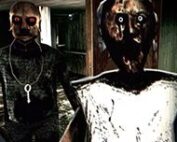
Once the Puppetmaster becomes an active presence, House 2 Full Game stops being forgiving. The Seamstress and Banshee both punish noise and hesitation in ways the earlier rooms never demanded, and it’s here that the “speedrun” comparison players make in community threads starts to feel accurate — the game genuinely does not wait for you to catch your breath.
This is also where the divisive part of the design shows up most clearly. Some players love the constant pressure; others feel the pacing undercuts the exploration and item-combination puzzles the opening hours clearly set up. Both reactions are common enough in discussions that it’s worth going in aware of the shift.
Endings, the True Ending, and Replay Value
House 2 Full Game supports multiple endings, and reaching the true ending depends on specific choices made well before the final confrontation, not just surviving to the credits. This is the answer to one of the more searched questions before starting a run — the best outcome has to be earned deliberately, not stumbled into.
Because the house state persists and reacts differently depending on earlier choices, replaying with the opposite approach — confrontation instead of caution, or vice versa — tends to surface content a first playthrough misses entirely.
BarkStation Minigames and Optional Detours
Scattered through the house are BarkStation minigames, including Kimiko’s Curse 2, which give players a brief, lower-stakes break from the main pressure of the house. They’re optional, but they’re also where some of the game’s more community-discussed easter eggs live.
- They don’t affect the main threat escalation directly.
- They’re a common topic in early impressions from players streaming their first runs.
- Finding all of them in a single run is a goal some completionist-minded players chase deliberately.
Does exploring slowly get you killed faster in House 2 Full Game?
Not inherently, but lingering in rooms after triggering a threat like the Seamstress or Banshee does. The house punishes hesitation after danger has already been signaled, not exploration itself.
Can you get the true ending on your first playthrough?
Technically yes, but it requires knowing which family-related choices matter before you reach them, which is why most players only manage it on a second attempt.
Is Marty required to progress?
No, but skipping his cues makes several rooms noticeably harder to read, especially once the Puppetmaster’s escalation begins.
Between Tabby’s frantic early hours, Melody’s slower unraveling of the same house, and a Puppetmaster that turns the back half of the run into something closer to a chase, House 2 Full Game earns the replays it clearly expects players to give it.

 2
2



















 2666
2666


