
 For Boys
 For Girls
 For Kids
 Top Games
 My Games
 Top Games
 My Games


Alice.exe Game Online

Description
What happens when Alice.exe begins altering its own rules before you even understand the basics? That question hits within minutes, as the game quietly shifts logic without warning and forces you to question whether your controls are reliable. The opening sequence already plants doubt by subtly delaying movement after interacting with the first Memory Fragment.
System Glitches and Alice.exe Behavior
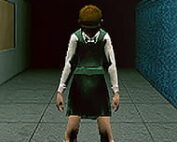
Alice.exe is built around instability, but not randomness. The character Alice changes movement speed based on hidden flags triggered by interacting with Memory Fragments scattered across the White Room. Players call these shifts “soft desync,” where controls feel slightly off but never completely broken.
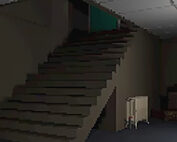
Early in the game, the White Room acts as a controlled environment, but once Error Hallway appears, navigation becomes unreliable. Doors that worked moments ago may no longer function, and pathways subtly shift orientation, creating disorientation that feels intentional rather than chaotic.
Puzzle-focused players enjoy tracking these inconsistencies and mapping safe routes, while casual players often find the unpredictability frustrating. The difference becomes clear once Fragment Cluster areas begin looping.
File Entities Inside Alice.exe
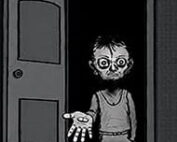
Enemies like NullChild and RedCaret behave like corrupted data rather than traditional threats. NullChild mimics player movement with a delay of roughly one second, creating pressure in tight spaces where repeated patterns become dangerous.
RedCaret, on the other hand, moves only when the camera shifts, forcing careful control of perspective. This mechanic becomes central by the time you reach Fragment Cluster zones, where multiple RedCaret instances overlap.
Stealth-oriented players adapt quickly by minimizing camera movement, but action-focused players struggle with the slow pacing these enemies enforce, especially when both appear simultaneously.
Memory Fragment Routing
Collecting Memory Fragments is not optional, but the order changes outcomes in subtle ways. Some fragments unlock stable paths, while others increase glitch frequency, creating a risk-reward system that is never explicitly explained.
This creates a hidden routing system where players debate optimal paths. The term “clean route” refers to minimizing glitch triggers while still collecting enough fragments to progress safely.
Missing a fragment often leads to dead-end loops, especially in Fragment Cluster zones where layout repetition becomes disorienting.
Interface Manipulation
The UI itself becomes part of the gameplay, which is one of the most divisive aspects of the game. Health indicators flicker, and sometimes disappear entirely, forcing players to rely on sound cues instead of visual feedback.
One recognizable moment is the static pulse that plays just before a NullChild duplication event. Players who have experienced it react instantly, often changing direction without consciously thinking.
This design choice is praised for immersion but criticized for lack of clarity, especially by players who prefer consistent feedback systems.
Player Questions Answered
- Why does Alice slow down randomly? Movement speed changes when hidden flags from Memory Fragments activate in the White Room or Error Hallway. Collecting stabilizing fragments reduces the effect temporarily, but certain routes increase instability intentionally.
- How do you avoid NullChild? Maintain distance and avoid repeating movement patterns that NullChild can copy. Because it mimics previous actions with delay, changing direction unpredictably prevents it from closing the gap.
- What triggers glitch loops? Entering Fragment Cluster areas without required Memory Fragments causes recursive paths. The system resets sections repeatedly until the correct fragments are collected, forcing backtracking.
Alice.exe stands out because interactions with NullChild and RedCaret reshape how you interpret control, turning even simple navigation through the Error Hallway into something you constantly question.

 62
62
 For Boys
  For Girls





























 2697
2697


