
 For Boys
 For Girls
 For Kids
 Top Games
 My Games
 Top Games
 My Games


Last Kid on the Bus Game Online

Description
In Last Kid on the Bus you start out asleep, slumped against a cold window with the rest of the seats already empty, which matters the moment you wake up somewhere that clearly isn’t the route home anymore.
| Genre | First-person Survival Horror |
| Visual Style | PSX / Low-poly |
| Setting | Abandoned school |
| Antagonist | The bus driver |
| Core Mechanic | Item collection, puzzle solving, hiding from pursuit |
Waking Up Alone in a School That Shouldn’t Exist
The opening minutes of Last Kid on the Bus set up a simple, almost mundane premise: you’re the last kid still on the bus, the driver is taking nearly an hour to get you home, and everyone else has already been dropped off. That ordinary frustration flips the moment you wake up inside an old school instead of your own street, and the game wastes very little time before the driver stops feeling like background scenery.
Players moving through the early rooms quickly pick up on the PSX-style visual presentation, with its grainy textures and limited draw distance doing a lot of work to make familiar school hallways feel disorienting. This isn’t a coincidence — the genre’s low-poly look has become shorthand in the indie horror space for exactly this kind of unsettling, half-remembered location, and the game leans into that visual language deliberately rather than as a budget shortcut.
Exploration-focused players tend to map out the school’s layout methodically before engaging with any puzzle, since knowing where every door and hiding spot is located gives a real survival advantage once the driver starts actively hunting. Players who prefer momentum over caution, by contrast, often grab whatever item is nearest and keep moving, accepting more risk in exchange for faster progress through the puzzle chain.
Solving Puzzles While the Driver Closes In
The puzzle structure in Last Kid on the Bus is built around a chain of items, where each object you find unlocks access to the next room or the next clue, until the final item guarantees an escape route out of the school. This sequential design means backtracking is rare once you understand the chain, but it also means a single missed item can stall an entire run, since there’s no shortcut around the order the puzzles are meant to be solved in.
What separates this from a purely puzzle-focused game is the driver, who roams the school with a hammer and resets your progress back to the beginning if he catches you. Community players frequently compare the driver’s pursuit pattern to “granny type” chase mechanics, a label that’s become common shorthand across indie horror circles for games where a single relentless pursuer punishes careless movement more than it punishes slow thinking.
By the time you’ve collected two or three items, the driver’s patrol routes start overlapping more with the rooms you still need to search, which is when most first-time players get caught for the first time. Veteran players of this subgenre know to listen for footstep audio cues before committing to a room, a habit that transfers directly from other chase-style horror games but still has to be learned fresh for this specific layout.
One detail that catches new players off guard is how short the actual runtime is — the entire game was built in a single week for a jam, and that compressed scope means the school doesn’t sprawl the way bigger survival horror maps do. Some players see this as a strength, since it keeps tension high without padding, while others wish the difficulty had more options, since a first playthrough can end either too easily or too punishingly depending on how quickly you learn the driver’s patrol habits.
Hiding Spots, Resets, and What Getting Caught Actually Costs
Getting caught by the driver doesn’t end the game outright — it sends you back to the start of your current attempt, which keeps the stakes high without making failure feel like a hard wall. This reset mechanic is fairly standard for the chase-horror genre, but it still stings more here because of how methodically you usually have to search each room for the next puzzle piece.
Hiding spots scattered through the school become the main tool for surviving close encounters with the driver, and learning which spots are actually safe versus which only look safe is part of the early learning curve. Some players specifically note that certain hiding spots feel inconsistent in how reliably they block detection, which is one of the more honest pieces of feedback circulating about the game’s first release.
Newer horror fans coming from games like Granny tend to adapt to the driver’s threat pattern quickly, since the core loop of explore, solve, hide is already familiar territory, while players new to the genre altogether sometimes underestimate how aggressively the driver investigates noise. Recognizing that the hammer he carries isn’t just a visual prop but a direct fail-state trigger is usually the moment a new player’s strategy shifts from casual wandering to careful planning.
How long does it take to finish Last Kid on the Bus?
Most players finish a clean run in well under an hour, since the school isn’t large and the puzzle chain is short by design, though first attempts often take longer due to resets caused by the driver.
Is the driver always the same threat or does he change?
The driver remains the single consistent antagonist throughout, patrolling the school with his hammer and resetting your progress on capture rather than escalating into multiple enemy types.
What’s the easiest way to avoid getting caught early on?
Sticking close to known hiding spots while listening for the driver’s footsteps before opening doors gives the most reliable buffer, since blind movement through unexplored rooms is what catches most new players in the first ten minutes.
Last Kid on the Bus turns a familiar frustration — being stuck on a bus longer than everyone else — into a tight, hammer-swinging chase through an old school, and the moment you finally hear that last lock click open after dodging the driver one too many times is exactly why the short runtime works in the game’s favor.

 49
49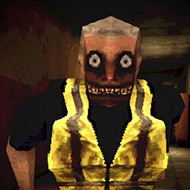
 For Boys
  For Girls





























 2697
2697


