

 For Boys
 For Girls
 For Kids
 Top Games
 My Games
 Top Games
 My Games


That’s Not My Mom! Game Online

Description
What actually happens the first time you walk through the front door and something about Mom feels off? In That’s Not My Mom!, that question isn’t rhetorical — it’s the entire premise. You play as a young boy coming home from school, and each return trip drops you back into the same rooms with the same routines, except now you’re expected to catch what’s changed before you say anything out loud.
| Genre | Horror, Anomaly Detection |
| Developer | Solitary Studios |
| Estimated Playtime | 40–60 minutes |
| Mode | Single-player |
Coming Home in That’s Not My Mom! Is Never Actually Routine
The house is small and the loop is short, but the game leans hard on repetition to build unease. You walk in, you check the same handful of rooms, and you look at Mom the way you’d check any other object in the scene — not for warmth, but for consistency. That reframing is uncomfortable on purpose. The domestic setting does a lot of quiet work here, because a living room or kitchen that’s been trustworthy for three visits suddenly holding one wrong detail lands harder than a jump scare would.
Players who come in expecting a narrative-driven horror game sometimes get thrown by how mechanical the actual moment-to-moment play is. That’s fair. The story exists, but it’s thin by design, and the developers have said as much themselves.
It’s a short session, and that brevity is part of the pitch rather than a shortcoming.
Reading Mom Like a Puzzle, Not a Person
Mom is the game’s central anomaly source, and the unsettling part is how ordinary she looks in the moments where nothing’s wrong. You’re not looking for something monstrous most of the time. You’re looking for a detail slightly out of place — something in how she’s positioned, something about the room around her — and that restraint is what a lot of players cite as the game’s strongest trick.
Completionists who replay runs specifically to catalog every anomaly they can find tend to notice how many of the changes are tucked into peripheral details rather than anything centered in frame.
The House as the Real Antagonist
Because so much of That’s Not My Mom! takes place across a handful of recurring rooms, the house itself starts to feel like the thing you’re actually up against. Once you’ve built a mental map of what each room is supposed to look like, any deviation stands out fast, which is exactly the point. The game doesn’t need a sprawling map to be effective. It needs a small one you’ve memorized well enough to notice when something in it lies to you.
How the Anomalies Escalate Beyond the House
Strange events don’t stay contained to the family home for the whole runtime. As the boy keeps returning from school, the game starts hinting that whatever is affecting Mom is spreading through the wider city, which gives the back half of the game a slightly different texture than the opening loop. It’s a small shift, but it changes what you’re bracing for during later visits — the anomaly stops feeling like an isolated glitch in one household and starts feeling systemic.
Where the Genre Comparisons Hold Up (and Where They Don’t)
That’s Not My Mom! wears its influences openly, drawing comparisons to Twisted Gallery and Exit 8 that the developers themselves acknowledge. The loop-based structure and anomaly-spotting core are clearly in that lineage. Where it diverges is tone — the domestic, personal framing of “is this actually my mother” carries a different emotional weight than a sterile hallway or gallery ever could, even with comparatively modest visuals doing the heavy lifting.
- How long does it take to finish That’s Not My Mom!? Most players clear it in roughly 40 to 60 minutes, making it one of the shorter entries in the anomaly-hunting genre rather than a long-form horror campaign.
- Is That’s Not My Mom! connected to Silent Still 3? It was developed as a smaller side project alongside Solitary Studios’ main title, Silent Still 3, though it stands as its own self-contained story rather than a direct tie-in.
- What should you check first when looking at Mom for anomalies? Start with her immediate surroundings and posture in each room rather than her directly, since many of the changes players report are tucked into peripheral details around her rather than anything overt.
By the time the credits roll on That’s Not My Mom!, the house you spent an hour memorizing feels less like a setting and more like a suspect. Mom never has to do much to unsettle you — she just has to be slightly wrong one more time than you expected, and that’s usually enough.

 40
40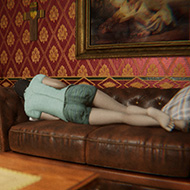
 For Boys
  For Girls
























 2673
2673


