
 For Boys
 For Girls
 For Kids
 Top Games
 My Games
 Top Games
 My Games


IKAPALI Game Online

Description
IKAPALI looks like a home invasion — you walk through a stranger’s house, open their drawers, piece together who they are from the objects they left out. What the game demands is something harder: you must decide whether the person sleeping in that house deserves to die, and you must make that call alone, in the dark, with a gun and a conscience that keeps interrupting each other. The game is built around that interruption. It is short, linear, and point-and-click, and none of those words prepare you for the specific kind of discomfort it creates in the space between clicking on a door and deciding whether to open it.
| Genre | Point-and-Click Horror / Psychological |
| Platform | Windows |
| Length | Short (single sitting) |
| Content Warnings | Loud noises, reference to suicide, stylized gore |
| Accessibility | Hyperacusis/ringing sensitivity option included |
What IKAPALI Actually Is and What It Asks
IKAPALI is a home invasion game with a premise that the page states without flinching: you are here to kill a predator, to protect the children and women he has harmed and will harm again. The moral case is made before you enter the house. The game’s interest is not in whether the case holds — it does — but in what happens to you as a person when you are the one who has to carry it through to completion. Vigilante justice in the abstract is a clean thing. Inside the house, with the geometry of someone else’s life arranged around you, it stops being abstract.
The point-and-click structure keeps the game’s pace entirely in your hands, which is an unusual choice for a horror title and exactly the right one here. There are no chase sequences, no monster revealing itself around a corner. The horror in IKAPALI is not what is going to happen to you. It is what you came here to do. Players who come in expecting external threat — a supernatural element, a reversal where the target turns predator — find that the game holds its premise steady in a way that is more unsettling than any jump scare. The threat you have to sit with is your own moral compass, which the game describes as something you may or may not follow blindly through death’s door.
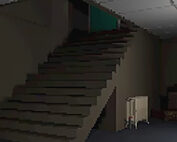
The walls snapping on their vertices as you move through the house — a distinctive stylistic choice noted consistently by players in comments — is the moment IKAPALI announces itself as something other than a standard horror game. That geometry is not broken. It is deliberate, and it functions the same way the whole game does: familiar shapes made wrong by context.
Exploration and What the House Reveals in IKAPALI
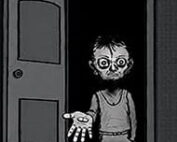
The house is not large, and IKAPALI does not ask you to search for hidden collectables or navigate a labyrinth. What it asks is that you look at what is in front of you. The rooms contain a life — objects, arrangements, evidence of who this person is outside the category you already assigned them before you entered. The game allows his life to unfold in front of you as you move through the space, and the word “allows” is doing significant work there. Other games would intercede. IKAPALI lets the information arrive at whatever pace your clicking establishes.
This is the mechanic that divides players most sharply. Some find that the human context deepens the experience — that seeing the texture of the target’s daily life is exactly what the game needs to make its moral question genuine rather than rhetorical. Others find it manipulative, a structural argument for hesitation that the game builds into the environment. Both readings are correct, and IKAPALI is aware of both of them, which is part of why the ending lands the way it does for players who did not expect it to.
The loud noise design is flagged in the content warnings for good reason. Players who have played through without prior knowledge describe specific moments where the audio is jarring enough to be physically affecting, and the hyperacusis option exists because the design intentionally uses sound to destabilize. This is not atmospheric background noise. The sound is part of what IKAPALI uses to create the sensation of doing something you cannot take back.
The Final Moment and What Players Disagree About
IKAPALI’s ending produces the strongest community reactions, and they split almost entirely along the line of what players were expecting versus what they got. The closing image — and the words that arrive with it — hit differently for players who entered with a clean moral framework than for players who spent the run second-guessing themselves. The comment sections describe people genuinely shaking after finishing, and describe people who felt the ending was the one thing the game had to earn and did.
The honest pushback that surfaces in discussions is about whether IKAPALI’s brevity is a strength or a limitation. The game is described in its own promotional copy as uber-short, which is accurate, and players who wanted more time inside the house — more rooms, more evidence, more time for the moral weight to fully settle before the ending — feel the game cuts off just as it is getting genuinely complex. Players who think its length is precisely calibrated argue that any additional content would dilute the specific pressure the game creates by keeping its scope tight and its pace entirely yours. This is a real disagreement, not a taste difference, and both sides have a legitimate case.
Thematically, IKAPALI sits in a group of indie horror titles that treat the player as a moral agent rather than a survivor. Players who find that subgenre compelling will find IKAPALI one of the more honest entries in it. Players who prefer horror that resolves into safety — where the player wins, where good and evil separate cleanly at the end — will find the game’s refusal to provide that resolution genuinely discomforting, which may or may not be what they wanted from a short horror game on a Wednesday night.
Frequently Asked Questions About IKAPALI
Does IKAPALI have multiple endings?
Based on player accounts, the path through IKAPALI is linear and the game does not branch significantly based on player choices during exploration. The experience is designed as a single sustained moral scenario rather than a system of alternate outcomes — the point is not to discover which ending your choices unlocked but to arrive at the ending having made the choices the game put in front of you. Some players describe the conclusion as feeling conditional regardless, because of how directly it addresses the protagonist’s state in the final moment.
How long does IKAPALI take to complete?
Most first-time players complete IKAPALI in a single sitting of under thirty minutes, which is consistent with the game’s self-description as uber-short. The point-and-click structure means pace is player-determined, and players who spend more time examining the house’s contents before proceeding will extend their run. Players who click through quickly to reach the ending typically find that the game loses much of its impact when rushed — the effect the house exploration has on the ending depends on having spent real time inside it.
Is the content of IKAPALI appropriate for people sensitive to loud noises or disturbing themes?
IKAPALI includes an explicit hyperacusis and ringing sensitivity option specifically for players whose hearing makes sudden loud sounds physically painful or disorienting, and the game page lists content warnings covering loud noises, reference to suicide, and stylized gore. The disturbing content is not incidental — it is the material the game is built from, and there is no version of IKAPALI that removes its thematic core. The sensitivity option addresses the audio specifically and is recommended by the game itself for players who need it.
IKAPALI stays with players in the specific way that games built around genuine moral weight do — not through images that replay in your memory but through the moment the ending arrives and the protagonist says something that reframes everything that happened inside that house. That final line, delivered at the point where IKAPALI can no longer protect you from what you came here to do, is the thing players mention when they recommend the game to each other. Short games rarely earn that kind of specific recall. IKAPALI does.

 54
54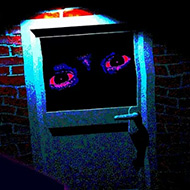






























 2697
2697


