
 For Boys
 For Girls
 For Kids
 Top Games
 My Games
 Top Games
 My Games


Project Threshold Game Online
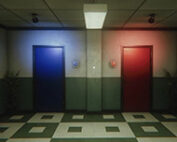
Description
You step through a fractured doorway in Project Threshold and immediately notice that even your own movement feels slightly out of sync, as if the game is waiting to see how you react before it commits to reality.
| Genre | Atmospheric sci-fi exploration game |
| Core loop | Traverse unstable threshold zones and stabilize resonance nodes |
| Main systems | Three-phase reality layering with adaptive distortion fields |
| Player focus | Spatial awareness, rhythm movement, environmental pattern reading |
First Contact Drift in Project Threshold
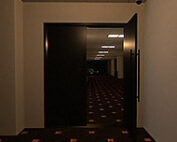
The opening corridor sequence in Project Threshold immediately introduces the idea that space is not fixed, and every step subtly alters the geometry behind you. Early movement feels slow, but that pacing is intentional because the game is calibrating your perception of distortion rather than teaching navigation. The Threshold Lattice begins responding to micro-movements almost instantly, especially when you pause near unstable wall segments.
Many beginners assume visual clarity is stable, but early distortion “lag blooms” often appear in peripheral vision first, especially near inactive resonance nodes. This is where players who rush tend to misread corridor alignment and fall into recursive loops. The system quietly rewards those who listen to ambient resonance hums instead of relying on visual certainty alone.
By the time you reach the second drift corridor, you start noticing that backtracking is never identical twice, even when you think you are repeating the same route. The game subtly shifts spatial memory anchors so that familiar paths become unreliable references.
Threshold Lattice Behavior in Project Threshold
The Threshold Lattice is not a static map system but a reactive spatial framework that recalculates geometry based on player rhythm and proximity pressure. In Project Threshold, this system becomes more aggressive once multiple instability fields overlap, creating unpredictable corridor compression effects. The lattice essentially “breathes,” expanding and contracting as you move through it.
Players often develop the community term “sync-walk,” which refers to matching step timing to lattice pulse cycles in order to reduce distortion spikes. This technique becomes essential once resonance noise layers stack beyond safe thresholds, especially in mid-zone traversal segments. The game never explicitly teaches this, but failure patterns make it obvious over time.
A divisive point in Project Threshold is that the lattice sometimes reacts inconsistently to identical movement patterns, which some players interpret as immersion while others see it as unpredictability. This disagreement is common in discussions about high-distortion runs where stability is intentionally reduced.
Node Stabilization and Risk Windows in Project Threshold
Node stabilization requires aligning three resonance points that appear only during brief activation windows, usually lasting under two seconds in unstable zones. The game escalates difficulty by compressing these windows as more nodes are activated, forcing increasingly precise timing decisions. Missing a window does not just reset progress but also shifts nearby geometry into higher drift states.
As progression continues, overlapping instability fields create chained risk zones where one failed stabilization affects adjacent corridors. This is where players who favor cautious planning outperform aggressive runners, since predicting collapse spread becomes more important than speed. The Threshold Gate areas amplify this pressure significantly.
A memorable moment for many players is the sudden drop into near silence before a lattice collapse event, where only a low resonance pulse remains audible. That moment becomes a recognizable emotional cue that something structural in the zone has failed.
Community Techniques in Project Threshold
“Ghost stepping” is a widely used technique where players intentionally trigger partial lattice responses without fully committing to a path, creating safer traversal timing. It is especially useful in late drift corridors where visual information becomes unreliable and movement prediction matters more than reaction speed. The game rewards this indirectly through reduced instability feedback loops.
Another debated strategy is node skipping, where experienced players bypass optional stabilization points to accelerate progression through high-density distortion zones. While this improves speed, it increases collapse probability in surrounding lattice sectors, which makes it risky in long survival runs. Completion-focused players generally avoid it due to instability stacking.
Resonance Drift refers to the delayed input feeling caused by heavy lattice instability, where movement commands appear slightly offset from player expectation, requiring recalibration of timing rather than direction.
Why does Threshold Lattice change unpredictably?
The Threshold Lattice in Project Threshold changes unpredictably because it recalculates spatial alignment based on movement rhythm and accumulated instability fields. When multiple resonance sources overlap, even identical paths can produce different geometric outcomes, especially in high drift zones.
What causes node stabilization failure?
Node stabilization fails when resonance points are not aligned within the short activation window, which becomes harder as instability layers stack. In Project Threshold, failure also increases local drift, making subsequent attempts more difficult in nearby structures.
What is ghost stepping used for?
Ghost stepping in Project Threshold is used to partially trigger lattice responses without committing to full traversal, giving players better timing control. It is most effective in late zones where distortion makes direct movement unreliable.
Project Threshold ends with final alignment inside the Threshold Gate sequence, where stabilized resonance briefly reveals the full structure of the Threshold Lattice and how deeply it has been reshaping every corridor since the first unstable step.

 67
67
 For Boys
  For Girls


























 2697
2697


