
 For Boys
 For Girls
 For Kids
 Top Games
 My Games
 Top Games
 My Games


Rotten Game Online
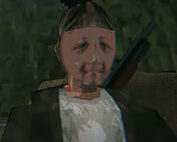
Description
What actually happens when you go looking for the gas can in Rotten? On paper it’s a chore. In practice it’s the moment the game stops pretending this is a normal night and starts telling you, through nothing but a shift in the music, that you should be worried.
| Genre | First-person horror adventure |
| Platform | Windows |
| Developer | Solo project, Redwolf Studios |
| Average playtime | Short, built for one sitting |
| Visual style | PSX-inspired |
The Routine Night That Turns in Rotten
Rotten opens exactly the way its description promises: a night that should have been unremarkable. There’s no dramatic cutscene dropping you into danger, no early jumpscare to signal what kind of game this is. You’re just going about a task, and the game lets that mundane rhythm sit for longer than most short horror titles bother to.
That patience is deliberate. Solo-developed horror games often rush the setup because there’s limited scope to work with, but Rotten spends its early minutes building a sense of normal so the eventual break from it lands harder. Players who’ve played a lot of PSX-style horror on itch.io tend to recognize this pacing choice and appreciate it, even if it means the first stretch feels uneventful on a first playthrough.
By the time you realize something is genuinely wrong, you’re already committed to finishing whatever task the game has put in front of you. That’s a small but effective design trick: Rotten never gives you a natural exit point once tension starts building, so backing out and reassessing simply isn’t an option the way it might be in a longer, more systems-heavy horror game.
Atmosphere-first players, the ones who play horror games primarily for mood rather than mechanical challenge, tend to rate this opening stretch highly precisely because nothing rushes them. Players who prefer constant stimulation, on the other hand, are usually the ones who describe the first few minutes as slow before the game earns their patience back later.
Fetching the Gas and the Moment the Music Turns
The gas can errand is the clearest example of how Rotten builds dread through mechanics rather than scripted scares. It’s a simple fetch task on the surface, but the game times its music shift almost exactly to the moment you’re committed to carrying it back, which means you can’t retreat to safety once the tension starts climbing.
What beginners get wrong here is treating the gas can task like busywork to click through quickly. Slowing down and actually paying attention to the audio cues during this section pays off later, since Rotten trains you early on to read its sound design as the primary warning system rather than relying on visual tells. Players coming in expecting jump-scare-heavy horror often miss this cue entirely on a first run, because they’re scanning the environment visually instead of listening.
Once the music picks up, backtracking doesn’t reset the tension. It keeps building, which is unusual for a game this short and catches a lot of first-time players off guard. By the time you’re back at the starting point with the gas can in hand, the score has usually shifted two or three distinct times, each shift subtly narrower and more insistent than the last.
This sequence is what most comment-section discussions point to when they talk about Rotten’s pacing. It’s short in absolute terms, but the density of tension packed into those few minutes is what players actually remember afterward.
What Beginners Misjudge About the Buried Man
The core of Rotten’s story is a secret that was supposed to stay buried, literally, and the man at the center of it. New players often assume this figure functions like a typical stalking antagonist, something to be avoided at all costs from the first encounter onward. That’s not quite how the pacing works.
Early appearances of the buried man are closer to warnings than direct threats, and misreading them as immediate danger tends to make players panic and burn through the game’s tension too fast. Community vocabulary around this kind of design often calls it a “slow reveal,” and Rotten leans into that structure harder than most PSX-style shorts on itch.io currently do.
Players who’ve finished multiple short horror games on itch.io tend to draw the same comparison: the buried man’s introduction feels closer to something like Lost in Vivo’s creature reveals than to a jump-scare-first antagonist, favoring dread over shock. That comparison shows up frequently enough in comments that it’s become a shorthand for describing Rotten’s tone to newcomers.
Once the buried man does become an active presence rather than a background implication, players who stayed calm and paced themselves through the earlier gas can sequence tend to have noticeably more composure left for the confrontation itself.
Community FAQ
- How long does Rotten take to finish? Most players clear it in a single short sitting, closer to the length of a long cutscene than a full game, which fits its billing as a compact PSX horror short. A second playthrough focused purely on the gas can sequence and its music cues typically runs even faster.
- What do you actually do in Rotten? The core loop involves handling everyday tasks around the property, including retrieving the gas can, while the game gradually reveals that the buried man hasn’t stayed where he was left. Most of the actual gameplay is navigation and observation rather than puzzle-solving in the traditional sense.
- Who is the buried man in Rotten? He’s the dreadful secret referenced in the game’s own description, a figure from the protagonist’s past who was meant to be gone for good and very much isn’t. His reappearance is staged gradually rather than delivered as a single reveal, which is part of what makes his presence linger after the credits.
Why Such a Short Runtime Still Rattles Players
One of the more honest points of disagreement in Rotten’s comment section is whether the short length undersells the concept. Some players want more time with the buried man’s story; others think the compact runtime is exactly what makes the dread land, since there’s no room for the tension to slacken.
It’s a fair criticism either way. A solo developer working within a tight scope has to make choices about what to cut, and Rotten’s choice to end quickly after its most tense sequence rather than drag out a resolution is the kind of decision that always splits a community. Players who finished the game in one sitting and immediately wanted a second chapter are effectively arguing that the ending works too well, cutting off right as investment peaks rather than overstaying its welcome.
There’s also a practical trade-off worth naming: a longer game built around the same gas can mechanic would likely need to introduce new systems to avoid repetition, and Rotten’s developer clearly chose depth over length instead, concentrating everything into one tightly wound sequence rather than spreading tension thinner across a bigger map.
Rotten works because it trusts a mundane task, one gas can and one quiet property, to carry the entire weight of its horror, and by the time the buried man makes his final appearance, that trust has paid off. It’s short, it’s rough around the edges in places, and it’s exactly the kind of game that proves a solo developer doesn’t need a big budget to make Rotten feel like something worth finishing in one sitting and thinking about afterward.

 46
46

























 2694
2694


