
 For Boys
 For Girls
 For Kids
 Top Games
 My Games
 Top Games
 My Games


Baldi’s Basics Level Editor Game Online
Description
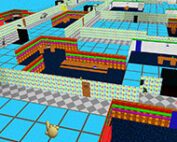
Baldi’s Basics Level Editor starts with an empty school layout, a basic hallway grid, and dozens of ways to accidentally create impossible notebook routes. Many players install the editor expecting a simple map tool, then spend hours adjusting locker placement, Baldi patrol timing, and item spawn logic. The editor became popular because it allows creators to shape tension directly instead of only reacting to it during gameplay. That freedom gives Baldi’s Basics Level Editor a surprisingly dedicated community. Players who spend enough time inside the editor quickly realize that small layout changes can completely transform how Baldi behaves during notebook chases.
Room Logic and Hallway Flow in Baldi’s Basics Level Editor
The first thing experienced creators test is hallway visibility. Long uninterrupted corridors make Baldi too predictable because ruler sounds travel clearly across the map. Short intersections, angled classrooms, and blocked sightlines create more uncertainty during notebook collection. Many creators deliberately include dead-end classrooms near notebook locations because escaping those spaces under pressure creates memorable panic moments.
Notebook placement also changes pacing dramatically. If notebooks appear too close together, Baldi accelerates before players can gather useful items. Many creators intentionally place early notebooks near BSODA spawns so the difficulty curve feels manageable. Once later notebooks appear beside Faculty Rooms or detention corridors, the game becomes significantly more stressful.
Maze-focused players build dense layouts with constant intersections, while horror-oriented creators prefer wider hallways where audio pressure becomes more important than navigation complexity. Puzzle-focused creators often hide Safety Scissors in risky side rooms to encourage dangerous detours.
One recognizable mistake in beginner maps involves oversized classrooms with almost no furniture. Empty rooms remove tension because players can immediately spot Baldi and other characters. Veteran creators instead use bookshelves, desks, and angled exits to break visibility and create uncertain escape routes.
Experienced creators also think carefully about spawn distance between notebooks and exits. If exits remain too close to final notebook routes, tension collapses during the ending sequence because players escape before Baldi reaches maximum speed.
Character Behavior Tuning Inside Baldi’s Basics Level Editor
Baldi’s movement speed is only one variable creators can modify. Playtime frequency, Principal patrol range, and First Prize movement timing all interact differently depending on room density. A school with narrow side corridors makes Arts and Crafters significantly harder to avoid. Once Gotta Sweep activates near central hallways, movement patterns can completely collapse.
One commonly searched question asks whether Principal of the Thing can guard exits effectively. The answer depends on detention room spacing and line-of-sight distance. If detention rooms spawn too close to notebook routes, players may become trapped repeatedly without meaningful escape options. Skilled creators therefore test multiple escape paths before publishing difficult maps.
Item Cycling controls how often tools like Safety Scissors, Alarm Clocks, and Zesty Bars appear. Balanced cycling prevents runs from feeling either impossible or trivial. Too many BSODA cans remove tension, while too few stamina items make larger schools frustrating instead of difficult.
Character overlap becomes another major balancing problem. Playtime beside narrow hallways feels annoying rather than tense if First Prize patrols the same area constantly. Veteran creators stagger character routes carefully so encounters feel dynamic instead of unfair.
Challenge creators sometimes intentionally design “chaos schools” where Baldi accelerates rapidly and item spawns remain scarce. Those maps attract challenge-run players searching for brutal survival scenarios, though many casual players avoid them because success depends heavily on luck and memorization.
What Creators Usually Get Wrong Early On
New creators often overload maps with characters immediately. Adding Baldi, Playtime, Gotta Sweep, and First Prize into cramped hallways usually creates unavoidable failures instead of tension. Better maps gradually introduce pressure by spacing encounters naturally across progression routes. Players should feel hunted, not trapped by unavoidable randomness.
Sound testing matters more than visuals in many custom schools. Veteran creators frequently walk through levels without collecting notebooks just to study ruler echoes and hallway acoustics. If players always know exactly where Baldi stands, suspense disappears. Some creators even lower environmental clutter specifically so ruler slaps remain easier to track through corners.
By the time advanced creators begin designing multi-floor schools, elevator placement and item economy become the primary balancing concerns rather than raw difficulty. Elevators that open directly into patrol zones frustrate players unless alternative routes exist nearby.
Another common issue involves excessive dead ends. A few dead halls increase tension because players must commit to dangerous routes, but too many dead ends turn notebook collection into repetitive trial-and-error. Community feedback often becomes harsh when custom schools rely more on surprise punishment than readable level design.
Exploration-focused players usually appreciate maps with hidden shortcut loops connecting distant classrooms. Speedrunners also value those layouts because optimized movement routes become more rewarding over repeated attempts.
Community Challenges and Map Vocabulary
The community regularly uses phrases like “dead hall,” “safe loop,” and “ruler bait” while discussing custom schools. A dead hall is a corridor with no escape routes, while ruler bait refers to intentionally creating sound trails that manipulate Baldi’s pathfinding. Those terms appear constantly in Discord map showcases. Players often judge custom schools based on whether routes create meaningful ruler bait opportunities.
One divisive topic involves unfair layouts. Some creators intentionally design schools where survival depends on perfect RNG, while others prefer consistent systems that reward route knowledge. Players usually recognize the difference within the first two minutes of a run. Maps overloaded with random item placement often divide the community sharply.
Puzzle-oriented players often enjoy notebook dependency maps requiring precise item usage. Meanwhile, challenge hunters search specifically for brutal “impossible school” creations built around aggressive Baldi acceleration. Horror-focused players usually prefer slower maps where ruler sounds remain threatening for longer periods.
Custom schools with memorable themes tend to spread quickly through community discussions. Cafeteria mazes, flooded hallways, and giant library wings became popular partly because they change how characters move through the school. First Prize behaves very differently inside narrow library corridors compared to open cafeteria layouts.
Many creators also compare custom schools using terms like “fair hard” and “RNG hard.” Fair hard maps reward route memory, stamina management, and item timing, while RNG hard maps depend heavily on random character placement. That distinction matters a lot in community rankings and challenge recommendations.
Can creators make outdoor sections in Baldi’s Basics Level Editor?
Some versions support exterior-style areas using custom textures and expanded corridors, though most creators still build enclosed schools because character AI behaves more consistently indoors. Open layouts can also weaken ruler-based audio tension. Outdoor sections usually work best as short transitions rather than huge open zones.
Why do some custom schools feel unfair immediately?
Unfair maps usually stack Playtime, First Prize, and narrow hallways near early notebook rooms. Without enough item spawns or alternate routes, players lose before meaningful adaptation becomes possible. Poorly placed detention rooms can also trap players repeatedly during the opening minutes.
How do advanced creators balance Baldi speed scaling?
Experienced creators adjust notebook spacing instead of only modifying movement speed. Slower notebook progression naturally delays ruler acceleration and gives players more opportunities to recover from mistakes. Strategic placement of Zesty Bars and BSODA cans also helps maintain pacing during longer notebook routes.
Baldi’s Basics Level Editor remains interesting because even small layout changes can completely transform how Baldi, Playtime, and Principal of the Thing interact across a school. The best custom maps are not always the hardest ones; they are the schools where ruler sounds, notebook routes, and item timing create memorable panic without feeling random. Players still remember custom schools where a perfectly timed BSODA escape through a cramped library corridor saved a run seconds before Baldi reached maximum speed.

 48
48
 For Boys
  For Girls



























 2677
2677


