

 For Boys
 For Girls
 For Kids
 Top Games
 My Games
 Top Games
 My Games


RUBATO Game Online
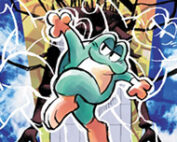
Description
What actually happens when you lick the wrong object in RUBATO and the physics engine decides to have an opinion about it? That question sums up why this game has built such a specific, devoted following — it’s a collect-a-thon that treats its own rules as something to be poked, tested, and occasionally broken by the player, and the community’s favorite stories almost always start with someone trying something the developer never explicitly intended.
| Genre | 2D physics-based collect-a-thon |
| Platform | Windows, with console support |
| Core Mechanic | Tongue-based interaction and momentum-driven platforming |
| Currency | Balls, spent at vending machines and shops |
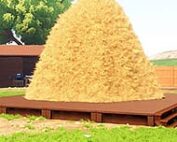
The BAKERY and Your First Steps Into RUBATO
Every run starts in The BAKERY, the first area of the game and the one most players end up replaying just to relearn the controls after a break. It’s built as a soft tutorial disguised as a normal level, teaching momentum, jump timing, and the basic tongue interaction without ever stopping to explain itself directly through pop-up text or a dedicated tutorial screen. The bass subarea tucked into The BAKERY is where the physics really start showing their teeth, with tighter platforming that punishes sloppy momentum control and forces players to commit to jumps rather than adjust mid-air.
Players coming in expecting a straightforward platformer are usually surprised by how much the physics engine governs everything. Momentum carries between jumps in a way that feels closer to a rolling ball than a traditional character controller, and getting comfortable with that takes longer than most players expect going in — often a full hour or more before the movement stops feeling slippery and starts feeling intentional. Precision-focused players tend to struggle here longer than players who lean into the looseness and let momentum carry them through gaps rather than fighting it.
Speedrunners in particular have latched onto The BAKERY’s early sections, since even small physics quirks here compound into meaningful time saves later, and the community has documented specific jump angles that shave real seconds off an otherwise straightforward route. It’s become one of the more actively discussed topics in the game’s speedrunning circles, with new routes still being found well after launch.
By the time players leave The BAKERY for the first time, they’ve usually built the core muscle memory the rest of RUBATO expects them to already have, which is part of why returning players so often replay this opening section rather than skip straight to a save file further along.
Tongue Physics — The Mechanic Everyone Underestimates
The tongue interaction is RUBATO’s signature mechanic, and it’s used for far more than eating. It can grab objects, redirect momentum mid-jump, and interact with a growing list of non-lickable objects the developer has kept expanding through updates, including a few easter eggs tucked into later areas specifically for players who try licking things they probably shouldn’t. Community forums have turned cataloguing these interactions into something of a running project, with players comparing notes on which objects trigger a unique animation versus a generic response.
New players tend to treat the tongue as a novelty for the first hour, mostly using it on obviously interactive objects like NPCs or collectibles, then realize by the time they hit Area 2 that it’s actually load-bearing for several of the harder platforming sequences. Sections that look like standard jump-and-land platforming often have a faster or safer route hidden behind a well-timed tongue grab that isn’t signposted anywhere on screen.
This is also where the game quietly separates casual players from completionists. Players chasing full clears end up testing the tongue against nearly every object in a room, while players focused purely on finishing the story tend to use it only when a puzzle explicitly requires it.
Collecting Planet Bits and What They Actually Reward
- Planet Bits are scattered through every area and trigger a distinct “Planet Bit Get!” pickup message when collected, which has become something of a community shorthand for describing a satisfying find.
- Enough Planet Bits gradually reform a planet on the world map, unlocking new paths and giving players a persistent visual sense of progress that most collect-a-thons handle with a simple percentage counter instead.
- Some Planet Bits are gated behind puzzles that require the tongue mechanic to reach, meaning full completion is functionally impossible without a solid handle on the game’s core interaction rather than just patience and exploration.
The collect-a-thon framing is doing real work here — this isn’t cosmetic completion, it’s tied directly to progression through the world map, and a fully reformed planet actively changes what’s accessible rather than just serving as a trophy for players to admire.
Balls, Vending Machines, and the RUBATO Economy
Balls function as the in-game currency, earned through exploration and spent primarily at vending machines that hand out bonus health. Prices climb fast enough that players have started joking about the game’s economy in the comments, with more than one review calling out the 500-ball machines as an unexpected gut punch mid-run, especially early on before players have learned the more efficient collection routes through The BAKERY and Area 2.
The customization shop at the end of certain sequences uses a separate reward track for cosmetic skins, which casual players often skip entirely while completionists treat it as a mandatory stop before moving on. None of the skins affect gameplay directly, but the shop has become a recognizable landmark in its own right, referenced constantly in screenshots and clips players share from their runs.
Resource-conscious players tend to hoard balls until they hit a vending machine drought, while more impulsive players spend as they go, and the game accommodates both approaches without meaningfully punishing either one.
Area 3’s Boss and the Secret Every Player Eventually Learns
The first Area 3 boss is the point where difficulty spikes noticeably, and it’s also where the game hides one of its better-known secrets: a specific projectile type in that fight can be parried, something the game never states outright and that most players only learn from forums or trial and error after a handful of failed attempts. Recognizing the wind-up on that particular attack is generally considered the single biggest turning point in the fight.
By the time players reach Area 3, they’ve usually built enough tongue-and-momentum fluency to handle it, but the fight still catches plenty of people off guard on a first attempt, especially players who treated the earlier areas as pure platforming and never had to react under real pressure. The boss arena itself uses many of the same physics quirks the rest of the game teaches, just compressed into a tighter, faster space.
Once players clear it, a noticeable number report going back to earlier areas with fresh eyes, having finally internalized the momentum-based movement the fight demanded of them.
Hard, Harder, and Hardest — Choosing Your Difficulty
RUBATO ships with three escalating difficulty tiers. Hard mode is close to the base experience with tighter margins, while harder and hardest layer on additional enemy patterns and reduce room for error significantly, particularly around the Area 3 boss where a single missed parry can end a run outright on the higher tiers. Most first-time players are steered toward standard settings, with the higher tiers aimed squarely at repeat runs from players who already know the game’s layout.
The jump between harder and hardest is where most of the community discussion happens, since it isn’t just a numbers increase — several attack patterns behave differently and demand routes that don’t work at all on lower difficulties.
What Players Still Debate About RUBATO
The controls are the most consistently debated part of the game. Several players have noted it takes real time to unlearn instinctive platformer habits, particularly around the jump timing, and not everyone comes around to it even after several hours. It’s a fair criticism, and one the developer has acknowledged directly in patch notes rather than dismissing, including adjustments to camera shake and input handling based on player feedback.
- How do you beat the Area 3 boss in RUBATO? Learning to parry its signature projectile is the key — the fight is built around that one interaction, and once players recognize the wind-up pattern the rest of the encounter opens up considerably, with the remaining attacks feeling far more manageable by comparison.
- What do balls actually do in RUBATO? They’re spent at vending machines for bonus health and factor into unlocking cosmetic content through the customization shop, making them worth collecting even outside of emergencies, especially once prices climb past the early game’s more forgiving costs.
- Is RUBATO hard for a collect-a-thon? The base game is manageable for most platformer fans willing to adjust to the momentum-based movement, but the harder and hardest difficulty tiers are genuinely demanding and clearly built for players who’ve already finished a standard run and want the Area 3 fight to punish them properly.
Between The BAKERY’s opening puzzles and the parry timing hidden in Area 3, RUBATO rewards the kind of curiosity that most collect-a-thons don’t ask for, and Tokki’s recurring appearances across the world map are usually the detail longtime players bring up first when they talk about it.

 44
44
 For Boys
  For Girls




























 2694
2694


