
 For Boys
 For Girls
 For Kids
 Top Games
 My Games
 Top Games
 My Games


Social Interaction Trainer Game Online
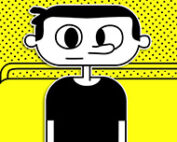
Description
Social Interaction Trainer looks like a joke about awkward eye contact and plays like one too, right up until you realize how precisely it’s timing every glance you make. Underneath the deadpan comedy is a genuine puzzle game about reading a room — literally, through where your character’s eyes are pointed.
| Genre | Puzzle adventure / comedy |
| Control scheme | Mouse or touch, gaze-only |
| Number of stages | 11 |
| Session length | Short, scene-by-scene |
Controlling Only the Eyes in Social Interaction Trainer
The entire game is built around one restricted input: where your character is looking. There’s no movement, no dialogue choices, no inventory — just eye contact, or the deliberate avoidance of it, guided by your mouse on desktop or a finger drag on mobile. Social Interaction Trainer takes that single mechanic and stretches it across eleven distinct scenes, each one framing a small, recognizable social situation and asking you to figure out where attention should and shouldn’t go.
This minimalism is deceptive. Because the only tool you have is gaze direction, every scene becomes a process of elimination — look at the wrong person or object for too long, and the moment sours in a way that’s usually obvious, if not always immediately explained. Players new to the game tend to treat this like trial and error at first, testing gaze direction almost randomly before settling into the game’s actual logic: attention has social weight, and misplacing it has consequences even in scenes as mundane as standing at a urinal or riding public transport.
What keeps the format from feeling repetitive across eleven stages is how differently each scene applies the same core rule. A cashier interaction rewards brief, polite glances rather than sustained staring, while a funeral scene demands a completely different kind of attentiveness — reading the room well enough to know exactly who deserves eye contact and when.
Reading the Room Across Eleven Scenes
Each stage in Social Interaction Trainer plays out as its own micro-puzzle with its own solution, and players comparing notes tend to agree the funeral scene is the one that trips people up most often on a first attempt. Getting through it cleanly hinges on directing a specific look toward the right person at the right moment — community discussion around the game frequently references figuring out that one character needs to be seen looking toward his boss rather than anywhere else in the scene, a detail that isn’t spelled out anywhere in the game itself.
That absence of explicit instruction runs through every stage. Social Interaction Trainer never tells you the rule for a scene outright; it only shows you the result once you’ve gotten it wrong, which pushes players toward a slower, more observational style of play than the game’s short runtime might initially suggest. Players who rush through stages on instinct tend to burn more attempts per scene than those who pause and actually watch how the background characters react before committing to a direction.
The tone throughout stays consistently deadpan, treating scenarios like Coffee, Park, and Interview with the same flat comedic delivery as more charged scenes like Romance or Baby, and that consistency is part of what makes the format work as a whole rather than a scattered collection of unrelated jokes.
Humor, Discomfort, and Where the Game Divides Players
Social Interaction Trainer’s comedy leans hard into discomfort, and that’s exactly where opinions on the game split. Some players find the format genuinely funny precisely because it exaggerates real social anxiety into something almost mechanical — reducing something as vague as “reading a room” into a literal input scheme is the joke, and for a lot of players that lands. Others find certain scenes land closer to mockery than parody, particularly around how the game frames social awkwardness itself, and that criticism shows up often enough in player discussion to be worth acknowledging honestly rather than glossing over.
Players sensitive to that framing tend to skip or rush through the scenes they find least comfortable rather than abandoning the game outright, since the short, self-contained structure of each stage makes that easy to do without losing progress elsewhere. Achievement-focused players, on the other hand, generally push through every scene regardless of tone, since Social Interaction Trainer’s full completion is tied to clearing all eleven stages rather than any specific subset of them.
- Cashier and Transport reward short, polite glances rather than prolonged eye contact, punishing players who linger too long on any one character in the scene.
- Park and Coffee introduce more ambiguous social cues, where the “correct” gaze target isn’t the most obvious person in frame.
- Funeral and Interview raise the stakes considerably, since a single misplaced look tends to end the scene on a noticeably worse note than the earlier stages.
How do you beat the funeral scene in Social Interaction Trainer?
The funeral stage requires directing your character’s gaze toward a specific figure who’s meant to be looking toward his boss rather than anywhere else in the scene, a solution most players only find after a few failed attempts since the game gives no direct instruction.
How many stages does Social Interaction Trainer have in total?
There are eleven scenes altogether — Cashier, Urinal, Transport, Coffee, Park, Romance, Interview, Parents, Work, Baby, and Funeral — each functioning as a self-contained gaze-based puzzle rather than part of a connected storyline.
Does looking away actually change the outcome of a scene?
Yes — deliberately avoiding eye contact is just as much a valid tool as making it, and several scenes specifically require looking away from an obvious focal point rather than toward it in order to resolve cleanly.
Stripped down to nothing but a pair of eyes and eleven awkward moments to navigate, Social Interaction Trainer turns something as ordinary as where you’re looking during a funeral into the whole puzzle, and that’s precisely the joke it never has to explain to land.

 51
51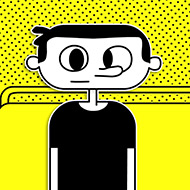
 For Boys
  For Girls
























 2696
2696


