
 For Boys
 For Girls
 For Kids
 Top Games
 My Games
 Top Games
 My Games


Hozy Game Online

Description
You walk into your family’s old home for the first time in years and it’s dusty, half-forgotten, and quietly waiting for you to decide what it becomes next. That’s the entire premise of Hozy — no timer counting down, no score to chase, just a mop, a few tools, and a room that only changes as fast as you want it to.
| Genre | Renovation and decoration simulation |
| Perspective | Third-person, room-based |
| Number of locations | 9 |
| Pacing | No timers or score systems |
Returning Home in Hozy
The setup is simple and never overexplained: after things didn’t work out in the city, your character returns to a hometown that’s grown quiet and partially abandoned in their absence. Hozy opens in the family home, the first of nine locations you’ll eventually restore, and treats the return itself as the emotional anchor for everything that follows rather than something the game dwells on directly.
Instead of dialogue-heavy scenes explaining what happened to the town, Hozy tells its story through what’s left behind in each space — furniture arrangements, personal objects, photographs tucked into drawers, the specific kind of clutter that builds up in a place people stopped visiting rather than one that was cleared out on purpose. Players drawn to slower, narrative-through-environment games tend to linger in early rooms longer than the cleaning objective strictly requires, just to take in what each space is quietly communicating before touching anything.
Later locations expand well beyond the family home, eventually including a café, an artist’s studio, and a house near the sea, each carrying its own visual identity and its own scattered evidence of who used to spend time there. Players who play purely for the restoration loop, without much interest in piecing together backstory, still tend to notice how distinct each of the nine spaces feels from the last, even without engaging directly with the environmental storytelling underneath.
Cleaning Tools and the Physics of Restoration
The moment-to-moment gameplay in Hozy revolves around a small set of physical tools — a mop for grime, a squeegee for glass and mirrors, a crowbar for pried-shut furniture and boarded panels — each with its own satisfying, physics-driven feedback rather than a simple progress bar filling up. Wiping down a dust-covered window in Hozy actually shows the streaks clearing in real time, which is a small detail, but it’s the kind of thing players frequently cite as the reason the cleaning loop stays engaging across nine full locations rather than feeling like a chore repeated on a timer.
New players sometimes rush the cleaning phase to get to decorating faster, missing smaller physics interactions the game rewards for patience — cobwebs that need a specific sweeping motion, or grime that comes off more thoroughly with slower, deliberate strokes rather than rapid clicking. Players who take cleaning as seriously as decorating tend to report a noticeably calmer overall experience, since Hozy’s tools were clearly built to reward unhurried interaction rather than efficiency.
Once a room is clean, decoration opens up, and this is where Hozy hands over the most creative control. Furniture, wallpaper, flooring, and small decorative touches like candles or books can all be freely placed, rotated, and combined, and the game never penalizes an unconventional layout the way a stricter design game might.
Decorating Without Rules, and Where That Freedom Gets Complicated
Hozy is explicit about having no wrong answers when it comes to placement — you can fill a cozy family kitchen with clashing colors and mismatched furniture if that’s the room you want to build, and the game won’t push back. Completionist players who enjoy fully outfitting a space before moving on tend to get the most mileage out of this freedom, spending considerably longer per room than players focused on simply clearing the restoration objective and advancing to the next location.
That said, the freedom comes with a structural catch that shows up often in player discussion: items have to be pulled out of their storage boxes one at a time, in a fixed order, including a discard box for anything you decide not to use. Players who want to preview several furniture options before committing to one often find this ordering restrictive, since retrieving an early discarded item means working back through everything placed after it. It’s a fair criticism, and one of the more consistent complaints in community feedback about an otherwise low-friction game.
Once a location is fully decorated, Hozy doesn’t necessarily end your time there. A Game Plus option lets you revisit completed rooms with an entirely different furniture set — and different implied occupants — turning a finished space back into a fresh decorating puzzle without resetting your original version of the room.
Sandbox Mode and Longer-Term Replay Value in Hozy
Beyond the story-driven locations, Hozy includes a Sandbox Mode that hands you a blank room and the full furniture catalog with no restoration objective attached at all. This mode strips away even the light narrative framing of the main game, appealing most to players who were always more interested in the decorating half of Hozy than the cleaning or story elements that come before it.
Because Sandbox Mode is still being actively expanded, players hoping for full control over room geometry — walls, layout, room shape itself — will find the current version more limited than a dedicated interior design tool, focused instead on flooring, wallpaper, and furniture placement within a fixed room shape. It’s a reasonable starting point rather than a finished sandbox, and that’s a fair expectation to set going in.
A flexible photo mode rounds out the experience for players who want to document finished rooms rather than just move on to the next one — filters and camera controls let you capture a completed space the way you might photograph a real room you were proud of, which fits naturally with how much of Hozy’s appeal comes from the finished result rather than the process alone.
Whether you’re carefully unboxing furniture one item at a time for the family home or throwing rules to the wind in Sandbox Mode with the full catalog in front of you, Hozy keeps its focus on the same idea across all nine locations: restoring a space is less about getting it right and more about making it feel like somewhere worth returning to.

 55
55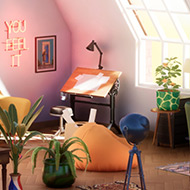
 For Boys
  For Girls






























 2697
2697


