
 For Boys
 For Girls
 For Kids
 Top Games
 My Games
 Top Games
 My Games


All the Gold in Fort Locks Game Online
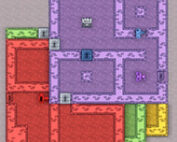
Description
All the Gold in Fort Locks looks like a simple key-and-door puzzler on the surface, but it plays like something closer to a logic trap you build for yourself one wrong move at a time. There’s no combat, no timer, and no enemies — just doors, keys, and the growing realization that the room you’re standing in used to have three more exits.
Stealing Gold, One Door at a Time
The central hook of All the Gold in Fort Locks is disarmingly simple: your only real tool is the ability to open doors, and every colored key you pick up corresponds to a colored door somewhere in the fort. Grabbing a key locks the door it came through behind you, which means every choice you make quietly removes an option from your future self. There’s no undo button and no way to reopen a door once it’s sealed, so the game is constantly asking you to think several moves ahead rather than react to what’s directly in front of you.
This is a game where players actively describe wanting to restart just to re-observe how a mechanic works, since the puzzle logic tends to reveal itself gradually across rooms rather than all at once in a tutorial. Freeing a colored key from one chamber often depends on remembering exactly how you freed a different key several rooms earlier, and there’s no in-game log to check back against. The orange key in particular tends to come up in player discussions as an early stumbling block, since freeing it requires understanding a door interaction that the fort hasn’t clearly demonstrated yet at that point in a typical playthrough.
Beginners consistently make one mistake: grabbing the nearest key without checking which door it seals off first. Fort Locks punishes impulsive collection hard, because a sealed door can strand you in a section of the fort with no way back to gold you haven’t collected yet. Players who prefer to methodically map out a room before touching anything tend to avoid this trap far more often than players used to faster-paced puzzle games, where grabbing the nearest useful item is rarely a mistake worth worrying about.
Checkpoints and the Stranding Problem
Checkpoints save your position automatically as you play, which sounds helpful until you consider that the game will just as happily save you into a position where you’ve locked yourself out of progress. This is one of the more openly discussed rough edges of All the Gold in Fort Locks — players have reported checkpointing into states where a room’s exits are all sealed, leaving no path forward except restarting the level from scratch. One frequently mentioned example involves all three keys getting pushed out of the west door of the purple room, a specific configuration players now recognize on sight as a dead end.
It’s a fair criticism, and it’s one the puzzle design leans into rather than fully solving: getting trapped is sometimes intended behavior, a consequence of a specific sequence of choices, not a bug. Other times it genuinely is an unintended dead end. Distinguishing between the two in the moment is part of what makes All the Gold in Fort Locks feel unusually tense for a game with no time pressure or enemies at all. That ambiguity is exactly what players in the comments have flagged when requesting a way to cancel or roll back the most recent checkpoint, rather than being forced into a full restart every time.
The absence of that rollback option is a genuine sticking point for newer players, even ones who otherwise enjoy the puzzle logic — losing thirty or forty minutes of careful key management to a single bad checkpoint is the kind of friction that shows up again and again in player feedback, and it’s one of the clearer examples of the game asking a lot of patience from the people playing it.
Reading the Fort’s Room Layout
Once you reach the fort’s more tangled mid-sections, single-color puzzles give way to layouts where multiple colored keys and doors interact in the same room, and that’s where the puzzle logic really compounds. A key pushed through the wrong door early on can lock away a route you’ll need three rooms later, so experienced players tend to pause and map out consequences mentally before touching anything. The purple room and the red room in particular are where a lot of players report getting stuck, since a closed red room can permanently strand a key that a later puzzle depends on.
Sequence-breaking: some rooms allow keys to be freed in more than one order, and players who enjoy optimization will often revisit a completed section just to find a cleaner solve, even though the game doesn’t reward this with anything beyond personal satisfaction. Finding an alternate order for freeing the yellow key, for instance, is the kind of detail that gets shared between players purely because it’s satisfying to discover, not because it unlocks anything extra.
Players who prefer a slower, methodical approach tend to fare noticeably better here than those used to twitch-based puzzle games, since almost every mistake in Fort Locks is a planning error rather than a timing one. Meanwhile, completionist-minded players often find themselves drawn back to early rooms purely to double check whether a different key order would have opened up a shortcut they missed. By the time a player reaches the fort’s final chambers, that habit of second-guessing earlier decisions has usually become second nature, which is part of why finishing the game tends to feel earned rather than simply completed.
How Long a Full Clear Takes
There’s no fixed length printed anywhere, but players who’ve finished a full run of All the Gold in Fort Locks commonly report needing well over an hour of focused play to see it through, and that number climbs fast for anyone who gets stuck on the fort’s tighter mid-game rooms. What determines how long you’ll spend on the fort’s gold isn’t reflexes or speed — it’s whether you can hold a growing mental map of locked and unlocked doors without losing track of it. Players who take notes on paper while playing, tracking which keys came from which doors, often report finishing meaningfully faster than those relying purely on memory.
The lack of a hint system is one of the most commonly requested changes among players who’ve gotten stuck, and it’s easy to see why: a puzzle this dependent on memory can turn punishing fast once a player has forgotten exactly how an earlier key was freed. Whether that difficulty is a feature or a flaw is genuinely split opinion, and both sides make a reasonable case — some players see the lack of hints as core to what makes the puzzle logic satisfying, while others see it as an unnecessary barrier for a game that’s otherwise approachable and slow-paced.
All the Gold in Fort Locks earns its reputation less through spectacle and more through the quiet dread of watching a purple door swing shut behind you, knowing there’s gold on the other side you may never reach again. It’s a small, mean little puzzle box of a game, and that’s exactly the point.

 38
38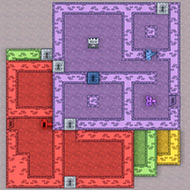
 For Boys
  For Girls




























 2668
2668


