
 For Boys
 For Girls
 For Kids
 Top Games
 My Games
 Top Games
 My Games


Hariti Game Online
Description
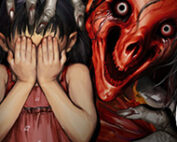
What happens when the corridors finally stop being quiet in Hariti? Most players spend the opening stretch waiting for that answer, since the hospital rarely announces danger the way most horror games do. The tension builds out of absence first: empty wards, a missing daughter, and the sense that something in the building is choosing when to be heard. Players who go in expecting a constant stream of scares often find that restraint unsettling in a different way than they anticipated.
| Genre | Psychological horror, first-person |
| Setting | An abandoned Chinese-style hospital |
| Player Role | A mother searching for her missing daughter |
| Core Loop | Exploration, investigation, and selective use of a weapon when confronted |
What the Name Hariti Actually Means
The title isn’t decorative. Hariti comes from Buddhist folklore, where she begins as a figure who devours children before later becoming a protector of mothers and children, and that contradiction sits at the center of the game rather than off to the side as flavor text. A mother searching a hospital for her daughter, in a story built around a figure who embodies both threat and protection toward children, gives the premise a weight that a generic haunted-building setup wouldn’t have. Players who clock this connection early tend to read the environment differently than those who go in expecting a straightforward chase game.
That cultural grounding extends to the hospital itself. Instead of the familiar Western asylum aesthetic most horror games default to, the corridors, signage, and ward layouts pull from Chinese hospital design and folk horror imagery, which is part of why the atmosphere reads as unfamiliar even to players who’ve been through dozens of haunted-hospital games before.
Players who come in already familiar with the Hariti myth tend to notice the duality woven into small details, recurring imagery, room arrangements, the way certain spaces feel protective while others feel like a threat, long before the story spells any of it out directly. Players unfamiliar with the folklore still pick up on the tension, but the layered meaning behind specific rooms and objects mostly lands for those who already know what the name is referencing.
Exploration Over Combat in Hariti
Beginners often misjudge the pace early on, treating the hospital like a shooting gallery once they’re told they can take up an appropriate weapon when threatened. In practice, combat is a last resort rather than a primary tool, and players who lead with confrontation tend to run out of resources before they’ve pieced together what’s actually happening to the daughter. Environmental storytelling is the term horror communities use for exactly this kind of design, where notes, room states, and sound cues carry more of the plot than any cutscene does, and Hariti leans on it heavily rather than explaining itself outright.
Sound design carries a lot of the weight here. Whispered audio cues and small environmental noises are how the hospital signals that something has shifted nearby, long before anything becomes visible. Early in the game these cues are sparse enough that new players second-guess whether they imagined them, which is clearly intentional rather than a rough edge.
Players drawn to action-forward horror sometimes describe the early hospital wards as frustratingly restrained, wanting a confrontation that the game keeps withholding. Players more interested in slow-burn atmosphere tend to treat that same restraint as the actual draw, reading every whispered cue as a clue rather than a missed opportunity for a scare. The weapon, when it does become necessary, registers as a genuine shift in tone precisely because the game has spent so long training players not to expect it.
Reading the Hospital’s Clues
A common question before starting is whether Hariti leans more toward investigation or toward survival. It’s closer to investigation: progress comes from piecing together what happened to the daughter through documents, room states, and the hospital’s own deteriorating layout, rather than from outrunning or fighting through threats. Players asking whether the weapon mechanic means constant combat will find the opposite is true, since reaching for it too early usually means missing the quieter cues the hospital relies on to tell its story.
That investigative focus is also where the folklore pays off narratively. Details that read as set dressing on a first pass, like ward names or recurring imagery tied to Hariti’s dual nature as both threat and protector, tend to reframe earlier rooms once a player understands what they’re looking at.
Completionist players tend to backtrack through cleared wards once new context comes to light, checking whether a room they dismissed early on actually held a detail tied to the daughter’s disappearance. Players more focused on reaching the end of the story usually accept missing some of those connections on a first pass, which is a trade-off the hospital’s layout seems built to allow for rather than punish outright.
Pacing That Divides Players
The biggest point of disagreement in early discussion isn’t the setting or the story, it’s pacing. Players who came in expecting frequent jump scares describe stretches of the hospital as too slow, while players drawn to atmosphere-first horror argue that’s exactly the point: Hariti is building dread rather than chasing a reaction every few minutes. Both reactions show up constantly in early impressions, and neither is really wrong, since the game is openly built around a slower psychological horror rhythm rather than the jump-scare cadence more common in the genre.
Players going in purely for the missing-daughter mystery tend to push through quickly, treating each clue as a checkpoint toward resolution, while players more interested in the folklore and atmosphere linger in rooms longer, picking apart environmental details that the faster pace would otherwise skip past. That difference in approach changes how the same hospital corridor can feel completely different depending on who’s walking through it.
The pacing debate isn’t likely to resolve itself, since it comes down to what a player wants out of a horror game rather than anything the hospital itself does inconsistently. What does seem to land across both camps, by most early accounts, is the moment the protective side of Hariti’s duality becomes visible in the story rather than staying purely thematic, since it reframes the dread players have been sitting with for hours rather than simply resolving it.
Whether Hariti’s slower psychological approach lands depends heavily on what a player wants from a horror game in the first place: those hoping for constant jump scares will find a lot of empty hallway between hits, while those drawn to dread built from absence and folklore, like the devouring-and-protecting duality baked into the title, are likely to find the wait worthwhile. Either way, the missing daughter at the center of the story keeps the hospital’s quiet stretches from feeling aimless.

 59
59































 2697
2697


